Get yourself picture-perfect with these tips
Good photos do not define a picture-perfect look. Rather, the attributes come from inside. In this guide, know how to look good in every photo with a few professional tips and tricks.
Discover why popular skincare ingredients and global trends often fail on Indian skin, and how climate and ingredients influence results.
By SOMA
Posted on | Last Updated
Skincare advice often travels fast across the internet, but it doesn’t always travel well. Many routines and ingredient trends are created for Western climates that are cooler, drier, or more consistent throughout the year. Indian weather, on the other hand, is far more demanding on the skin.
Most parts of India experience high humidity, strong sun exposure, dust, pollution, and frequent seasonal shifts. Even within the same year, skin can behave very differently during peak summer, monsoon months, and winter.
Because of this, products or ingredients that work beautifully in one climate may feel heavy, irritating, or ineffective in another.
For example, an ingredient that feels nourishing in a cold, dry environment can easily clog pores in humid weather.
Similarly, lightweight products designed for oil control may leave the skin tight and uncomfortable during winter or in dry regions.
This is why I’ve found that blindly following global skincare trends often leads to confusion, breakouts, or sensitivity for my Indian skin.
Indian skin also tends to be melanin-rich and reactive, which means it responds strongly to heat, sun exposure, and active ingredients.
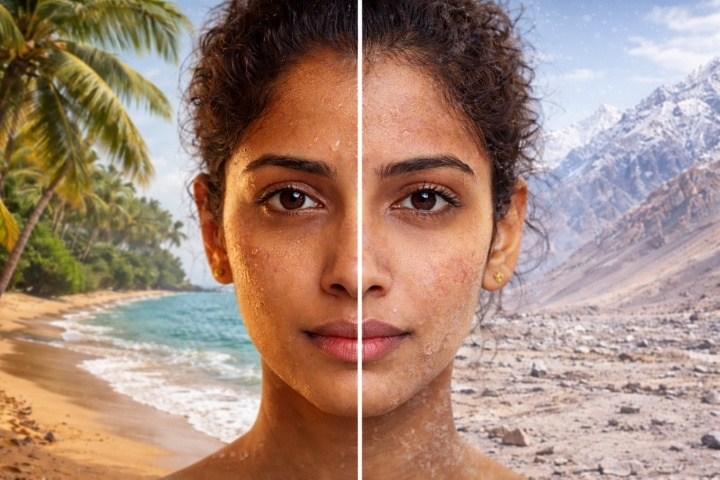
Issues like tanning, pigmentation, acne flare-ups, and sensitivity are often influenced more by climate stress than by skin type alone.
Understanding skincare through the lens of climate first, skin type second helps make better choices.
Instead of chasing trends, focusing on ingredients that support the skin barrier, manage heat and humidity, and suit seasonal changes leads to healthier, more balanced skin in the long run.
This approach forms the foundation of building a skincare routine that actually works for Indian conditions — practical, adaptable, and skin-friendly rather than trend-driven.
When it comes to skincare, most of us have heard the standard labels—oily, dry, combination, or sensitive.
While these categories are useful, they don’t always tell the full story for Indian skin. In reality, skin behaviour in India is shaped not just by genetics, but also by climate, environment, lifestyle, and daily exposure to heat and pollution.
Many people in India notice that their skin doesn’t stay the same throughout the year. Skin that feels oily and congested in summer may suddenly feel tight or flaky in winter.
During monsoon months, even normally balanced skin can experience breakouts or sensitivity due to excess humidity and sweat.
This seasonal shift is one of the biggest reasons why a single, fixed routine rarely works year-round.
Another important factor is that Indian skin is often melanin-rich, which offers some natural protection against sun damage but also makes the skin more prone to pigmentation, tanning, and uneven tone when irritated.
Even mild inflammation—caused by unsuitable ingredients, over-exfoliation, or harsh actives—can leave behind stubborn marks.
Sensitivity, too, is not always a permanent skin type. For many, it develops over time due to barrier damage, frequent product switching, or using strong actives without considering climate conditions.
What feels like “suddenly sensitive skin” is often skin that is overstressed rather than inherently delicate.
This is why understanding Indian skin requires looking beyond labels. Paying attention to how your skin reacts to weather changes, sun exposure, and ingredient combinations helps in making better skincare choices.
Instead of forcing the skin into a fixed category, it’s far more effective to adapt routines and ingredients based on how the skin behaves in real conditions.

Hot and humid weather can be especially challenging for the skin. Excess sweat, oil production, and environmental pollutants often combine to clog pores, trigger breakouts, and leave the skin feeling greasy or uncomfortable.
In such conditions, the goal of skincare should be to support the skin barrier while keeping the routine light and breathable.
Niacinamide is one of the most versatile ingredients for humid climates. It helps regulate excess oil, strengthens the skin barrier, and improves uneven tone without feeling heavy.
When used in moderate concentrations, it suits most Indian skin types and works well under sunscreen or makeup.
Despite the humidity, skin can still lose water due to heat and sun exposure. Lightweight hyaluronic acid-based serums help maintain hydration without adding grease.
In humid weather, these formulations absorb quickly and give the skin a plump, comfortable feel.
Green tea is rich in antioxidants and has calming properties, making it ideal for skin exposed to heat and pollution.
It helps reduce redness, controls excess oil, and provides gentle protection against environmental stressors common in Indian cities.
For those prone to breakouts during summer or monsoon, low-strength salicylic acid can help keep pores clear.
It works by gently exfoliating inside the pores, reducing congestion caused by sweat and sebum. In hot climates, it’s best used sparingly to avoid over-drying.
Aloe vera offers instant soothing and light hydration, making it a summer-friendly ingredient. It helps calm heat-induced irritation and supports skin recovery after sun exposure, without leaving a sticky residue when used in gel-based formulations.
Zinc helps control oil production and supports acne-prone skin. It is also commonly found in mineral sunscreens, where it provides broad-spectrum sun protection without feeling overly heavy in humid conditions.
In hot and humid weather, it’s best to avoid overly rich creams, heavy oils, or layering too many actives at once.
Choosing ingredients that are light, calming, and functional allows the skin to breathe while still receiving the care it needs.

In colder months or in naturally dry regions, the skin often struggles with moisture loss, tightness, and a weakened barrier.
Low humidity, cooler winds, and frequent hot showers can strip the skin of its natural oils, making it feel rough or sensitive.
In these conditions, skincare should focus on restoring moisture, strengthening the barrier, and preventing water loss.
Ceramides are essential for maintaining a healthy skin barrier. They help lock in moisture and protect the skin from environmental stress.
During winter, ceramide-rich products can reduce dryness, flaking, and sensitivity, making the skin feel more comfortable and resilient.
Glycerin is a highly effective humectant that draws moisture into the skin. It works well even in colder weather when paired with barrier-supporting ingredients.
Unlike some heavier hydrators, glycerin provides deep hydration without feeling suffocating.
Squalane mimics the skin’s natural oils and helps prevent moisture loss without clogging pores. It is particularly useful in dry weather, as it softens the skin and improves texture while remaining lightweight enough for daily use.
Shea butter is rich in fatty acids and offers excellent nourishment for dry or compromised skin. In winter, small amounts can help soothe irritation and seal in hydration, especially for those experiencing flaky or tight skin.
Oat-based ingredients are known for their calming and protective properties. They help reduce itching, redness, and discomfort caused by dryness, making them suitable for sensitive skin during colder months.
Dry skin can often look dull due to dead skin buildup. Low-strength lactic acid helps gently exfoliate while also supporting hydration, making it a better choice than harsher exfoliants in winter.
In dry or winter-prone conditions, it’s important to balance hydration with nourishment. Over-cleansing or skipping moisturizers can worsen dryness, while choosing barrier-friendly ingredients helps the skin stay healthy and comfortable throughout the season.
Sensitive skin is often misunderstood as a fixed skin type, but in many cases, it is a sign of a weakened or overworked skin barrier.
Heat, sun exposure, pollution, frequent product switching, and strong actives can all contribute to sensitivity, especially in Indian conditions.
For sensitive skin, the focus should be on calming, repairing, and protecting rather than correcting aggressively.
Panthenol helps soothe irritation and supports barrier repair. It improves hydration and reduces redness, making it especially helpful for skin that feels reactive or easily inflamed due to climate stress.
Centella is known for its calming and healing properties. It helps reduce inflammation, supports collagen production, and strengthens the skin barrier.
For sensitive Indian skin exposed to sun and pollution, it offers gentle but effective care. I can vouch for it as a dry and sensitive skin person. I used the one from the brand, One Thing; truly loved it.
Allantoin promotes skin healing and reduces irritation. It helps smooth rough texture and makes the skin feel more comfortable, which is important when sensitivity is triggered by dryness or environmental factors.
Colloidal oatmeal helps relieve itching, redness, and discomfort. It forms a protective layer on the skin, making it ideal for sensitive or compromised skin during weather changes or after sun exposure.
Ceramides play a crucial role in repairing and maintaining the skin barrier. For sensitive skin, consistent use of ceramides helps reduce reactivity over time by strengthening the skin’s natural defense system.
Beyond individual ingredients, formulation matters. Products with fewer ingredients and no added fragrance are often better tolerated by sensitive skin, reducing the risk of irritation or flare-ups.
Sensitive skin benefits most from patience and consistency. Instead of trying multiple actives at once, focusing on barrier-supporting ingredients allows the skin to gradually recover and become resilient in Indian conditions.

Even with the right intentions, skincare often goes wrong when ingredients are chosen without considering climate, skin behaviour, or usage habits.
In India, these mistakes are quite common and often lead to breakouts, sensitivity, or long-term skin damage rather than improvement.
Many people continue using rich, occlusive creams throughout the year. While these may feel nourishing in winter, they can clog pores and trigger breakouts during summer or monsoon months.
In humid conditions, lighter textures are usually better tolerated.
Ingredients like retinoids, exfoliating acids, and vitamin C are powerful but not meant to be layered excessively.
Using multiple actives together, especially in hot weather, can weaken the skin barrier and increase sensitivity, tanning, or irritation.
Applying strong actives without proper sun protection is a common mistake. In Indian climates, sun exposure is intense, and ingredients that increase photosensitivity can lead to pigmentation if sunscreen use is inconsistent or inadequate.
Constantly changing products in search of quick results can stress the skin. Indian skin, which is already dealing with heat, pollution, and humidity, often needs time to adjust.
Frequent switching makes it difficult to identify what actually works.
Herbal or natural ingredients are not automatically gentle. Some plant extracts or essential oils can cause irritation or allergic reactions, especially on sensitive skin.
Understanding how an ingredient behaves on the skin is more important than its origin.
Many routines focus only on correcting problems like acne or pigmentation while neglecting barrier health.
Without proper hydration and barrier support, even the best ingredients can start causing irritation over time.
Avoiding these common mistakes can make skincare more effective and far less frustrating.
Paying attention to how ingredients interact with the climate and with each other helps in building a routine that supports the skin instead of overwhelming it.
Skincare labels can be intimidating—long lists of hard-to-pronounce names, numbers, and percentages that make even seasoned beauty lovers pause.
But if you know what to look for, reading ingredient lists becomes one of the most powerful tools in your skincare journey.
This is something I always emphasize on Cosmetics Arena because understanding ingredients is not just helpful — it’s necessary for making the right choices (especially in Indian climates where product performance varies so much with weather and skin conditions).
If you ever feel overwhelmed when checking a product’s label, I’ve already written a full breakdown that explains everything from featured components to INCI order and how to prioritize what matters most in any formula 👉 how to read ingredients of cosmetics and the definition of featured components.
In that post, I walk you through exactly how ingredients are listed, what the percentages imply, and how to spot key actives versus fillers.
But here in this article, let’s cover the practical approach you should use every time you pick up a product:
Ingredients are always listed in descending order of concentration. This means the ones at the top are present in the largest amounts — and often have the most impact on how the product performs.
Learn to scan from top to bottom and look for familiar names like humectants, emollients, or actives you know work for your skin type and climate.
Just because a product has a long list doesn’t mean it’s better. Some of the most effective products have shorter, well-targeted lists that focus on what your skin actually needs.
For example, if you’re dealing with dryness in winter, you want things like ceramides and glycerin near the top — not buried at the very bottom.
Fragrance, high concentrations of alcohol, or repetitive silicones can be irritating, especially for sensitive or climate-stressed skin.
These aren’t always “bad,” but when they appear high up in a formula, they deserve a second thought — especially if you’re prone to sensitivity.
Words like “natural,” “organic,” or “clinically proven” sound great — but they don’t replace real ingredient understanding.
That’s why I always tell readers to read labels first and headlines second. The real magic — and safety — is in the ingredients, not the claims.
Learning to read skincare labels changes everything — it helps you avoid confusion, choose products that actually suit your skin and climate, and even saves you money by steering you away from formulas that are all sizzle and no substance.
If you want the complete ingredient decoding guide, with real examples and clear explanations, check out my in-depth post on how to read ingredients of cosmetics and the definition of featured components (link above).
It’s especially useful when you’re scanning products from different brands or from online stores where you can’t touch, smell, or feel the texture first.
Skincare works best when it is rooted in understanding rather than impulse. While trends can be exciting and sometimes informative, they don’t always translate well across different climates, skin behaviors, or lifestyles.
For Indian skin, which constantly adapts to heat, humidity, pollution, and seasonal changes, thoughtful ingredient choices matter far more than following what’s popular at the moment.
Learning how ingredients behave, how formulations work, and how your skin responds over time allows you to build a routine that feels supportive rather than overwhelming.
Instead of chasing instant results, focusing on barrier health, climate-appropriate ingredients, and consistency leads to more balanced and resilient skin in the long run.
At the end of the day, skincare is personal. What suits one person may not suit another, and what works in one season may need adjustment in the next.
Paying attention to your skin, reading labels with awareness, and choosing ingredients intentionally helps you make informed decisions—ones that respect both your skin and the environment it lives in.
When skincare choices are made with clarity and patience, the results tend to follow naturally.

Good photos do not define a picture-perfect look. Rather, the attributes come from inside. In this guide, know how to look good in every photo with a few professional tips and tricks.

We often think that heading out to gym is the only way to stay fit. Instead, know 10 simple ways how you can stay fit and healthy at home.
How are you my beautiful friends? Today I have come […]

Know how iron rich foods and iron supplements can be an effective way to improve overall skin health for those who are iron deficient.

Wondering how to build confidence through lifestyle changes? This guide explores how daily routines—from movement and nutrition to mindfulness and self-care—lay the foundation for lasting self-worth.

Bariatric surgery might sound a bit mysterious but it's not in reality when the experts explain how it can help you to deal with obesity.
Hello beauties, welcome to CA. Today I would review Ecotique 5 […]
How amazing the formulations are? Are these products effective? Well! It's time to dig in the answers.

Rashes between breasts are pretty common among women of all ages with all sizes of chest. Explore the 10 common causes, treatment, and prevention to stop the spread of these nasty rashes.

Learn how to recognize warning spots on skin, from ringworm vs eczema to changing moles and unusual patches. Discover which skin signs may indicate underlying health problems.

True beauty shines from within—but a little help from modern treatments can enhance that glow. Discover how under-eye filler injections help women reduce signs of aging, boost confidence, and reveal a refreshed, youthful look—without surgery.
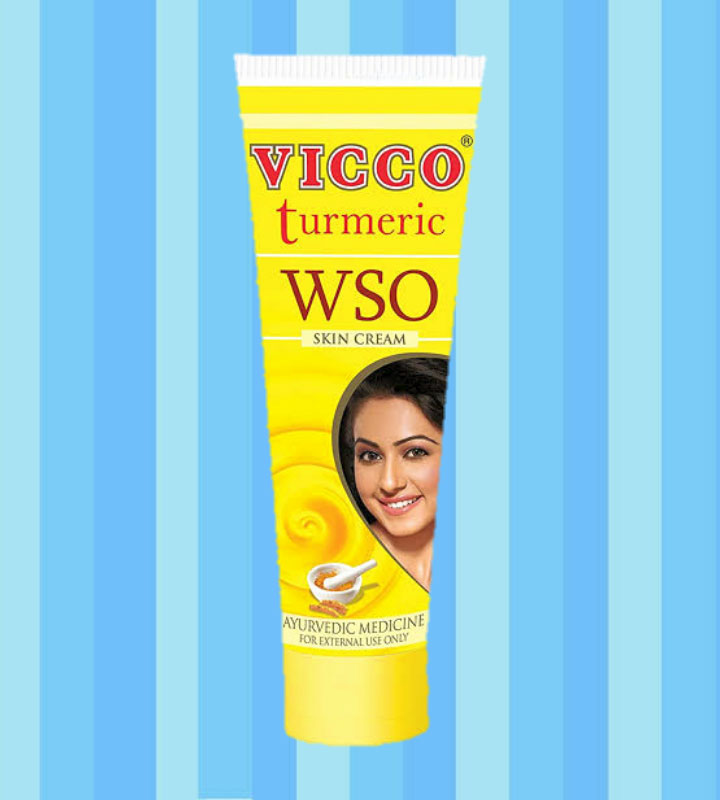
So, how effective the ingredients are? What is the difference between an ayurvedic cream and a cosmetic cream? It's time to take a look at the ingredients of Vicco Turmeric WSO Skin Cream.