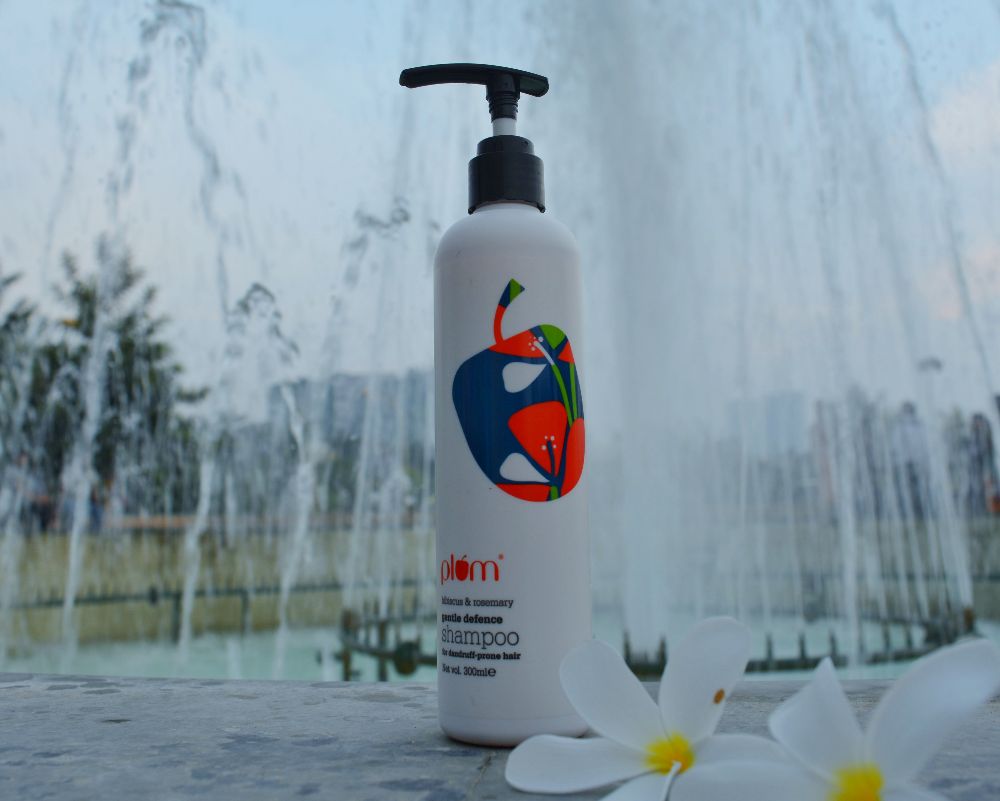
Plum hibiscus and rosemary gentle defence shampoo review
|| Plum Hibiscus and Rosemary Gentle Defence Shampoo || Hello Angel! […]
You’ve spent twenty minutes on one side of your head and the ends still have a kink. Or your hair is sleek at 9am and puffed up again by lunch.
Blame the straightener before you blame your hair. One that suits thick, wavy hair can scorch fine hair.
One built for a short bob will take forever on hair that reaches your waist.
Plate width and plate material decide how a straightener moves through your hair. Temperature decides how much damage it does on the way.
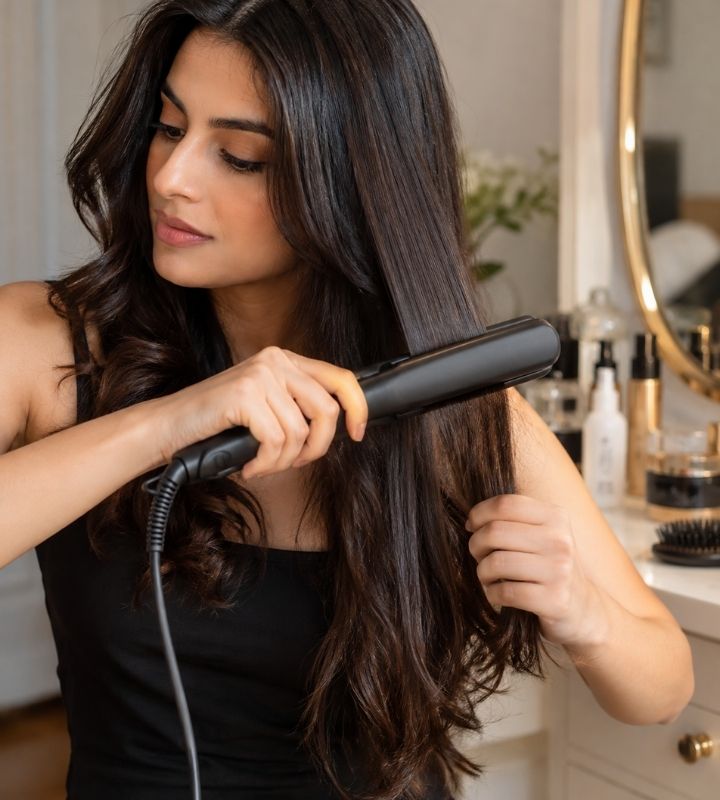
A straightener that works for your sister can still be wrong for you.
Count your passes. If each section needs four or five before it stays down, something is off.
Then notice the smell. Dry hair that sizzles or smells burnt is getting more heat than it can take.
Two smaller signs are easy to miss. There’s a bend near your scalp you can never get rid of, because the plates can’t get close to the roots.
And your ends turn dull and rough a few weeks after you started using the tool.
If two of these sound familiar, look at the plates first.
Wide 43mm plates cover more hair per pass, so they get through long or thick hair faster. Slim 15mm plates reach the roots on fringes and short cuts. Most medium-length hair is fine with 26mm.
ghd hair straighteners come in plate widths from 15mm on the Mini to 43mm on the Chronos Max, with 26mm plates on the Chronos and Platinum+ in between.
ghd says the Chronos Max plates are 85% larger than its standard ones.
On long, heavy hair, that means fewer sections to get through before you can leave the house.
Wide plates have a cost. They’re clumsy at the hairline, and flipping your ends out with one is awkward.
Slim plates are precise, but on thick hair past your shoulders they can double your styling time.
Shoulder-length? Get a mid-width plate. It does both jobs well enough.
Ceramic spreads heat evenly across the plate. That makes it the gentler pick for fine or colour-treated hair.
Titanium heats fast and pushes that heat into the hair quickly, which is what you want if your hair is thick and refuses to straighten. On fine hair I’d avoid it.
There’s less margin before the hair over-dries, and you won’t always notice until the ends start to feel like straw.
Tourmaline is usually a coating on ceramic plates. Brands claim it gives off negative ions that cut frizz.
Almost all the evidence for that comes from the brands themselves, so I wouldn’t pay extra for it.
Condition matters more than material. A chipped or scratched plate snags hair and heats in patches, and that does more harm than picking the “wrong” material.
Most people set the dial higher than they need to.
Bleached or chemically treated hair is safest at 150–160°C. Fine hair in good condition will straighten somewhere in the 160s.
Healthy medium hair handles 170–185°C, and thick or tightly curled hair may need up to 190°C.
Go past that and the keratin in your hair starts to weaken with repeated styling.
If you’re tempted to turn it up to save time, take smaller sections instead.
ghd takes a different line. Its stylers run at a fixed 185°C, a number the brand says its lab in Cambridge settled on as the point where hair styles well with the least heat damage.
On the Sculpt styler, ghd says the heat adjusts at the hair as you go.
A fixed temperature is one less thing to get wrong.
If your hair is very fine or heavily bleached and you want to go lower, check whether the model you’re looking at lets you adjust it.
Heat protectant goes on first, every time. Look for silicones such as dimethicone, or film-forming polymers.
They coat the hair and slow how fast heat and moisture move through it.
Then wait. Straightening damp hair is one of the fastest ways to wreck it, because the water trapped inside the strand heats up and can leave tiny bubbles in the hair shaft.
If you hear a hiss on hair you thought was dry, it wasn’t.
Hard water is a separate problem. Mineral buildup makes hair feel rough and leaves residue on the plates.
Wipe the plates with a damp cloth once they’ve cooled, and use a clarifying wash every week or two.
In humid weather, a couple of drops of light serum after straightening keeps frizz down for longer.
Start with length. Hair at or above your shoulders is fine on 26mm or narrower. Long, thick hair moves faster on wide plates.
Texture comes next: ceramic for fine or coloured hair, titanium for coarse hair that won’t budge.
Once it’s home, test it on one small section at the lowest setting.
Go up 10 degrees at a time until that section is straight in one or two passes, then leave the dial there.
|| Plum Hibiscus and Rosemary Gentle Defence Shampoo || Hello Angel! […]
It's time to let your mane shine and grow long with a short and crisp list of the 5 best hair growth serums of this year. All these serums have amazing components. Have a look!

Are you in trouble with your thin hair? Is your scalp dandruff-prone? Check out the simplest homemade hair mask recipes you need to try out to eliminate all the hair woes.

Every year the Great Indian Festival on Amazon offers a number of amazing deals and crazy offers. Take a look at my wishlist for this year where I have added 5 interesting things.
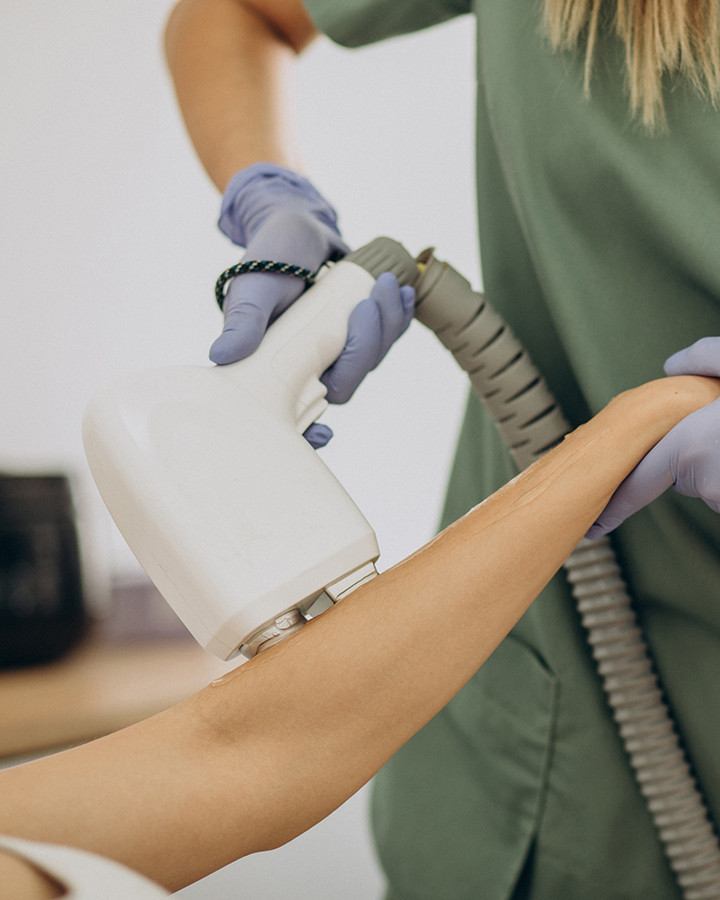
Electrolysis and laser hair removal are popular lasting hair removal methods. But how are they different? Which one is better? Know the answers here.
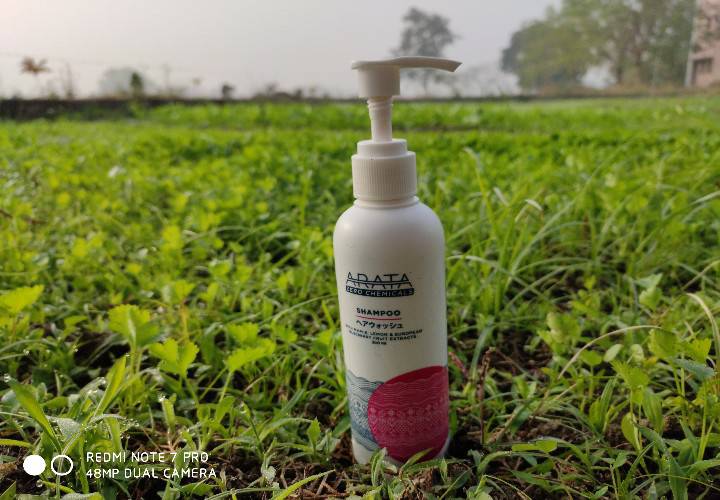
Are you looking for a sulphate free shampoo? Check out whether Arata shampoo can meet your requirements or not.
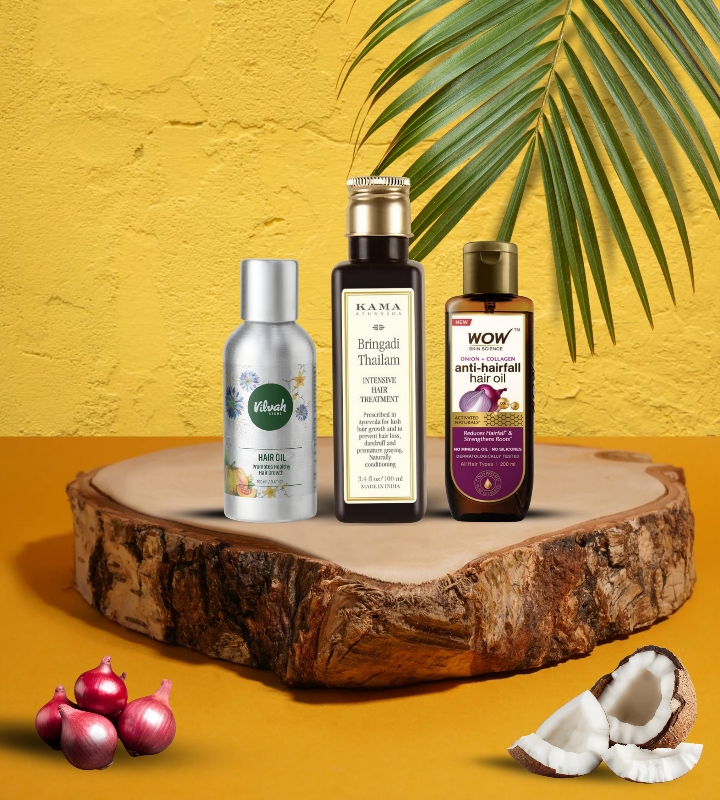
Do you want healthy locks but are confused about choosing the best? Here is a complete guide to help you find the best hair oil in India.
It's not easy to choose the right shampoo for hair. Well! It's time to explore some pro tips that would help you to improve your current haircare regime.
Scalp Micropigmentation might be a permanent solution to solve hair loss trouble. But, before a sitting, know the crucial things about the procedure first. And, this article can be your one-stop guide for that.

Wondering how to get a perfect and healthy beard? All you need is good natural beard oil. In this compilation, we have discussed about 5 such beard oils in India that are natural and harsh chemical free.
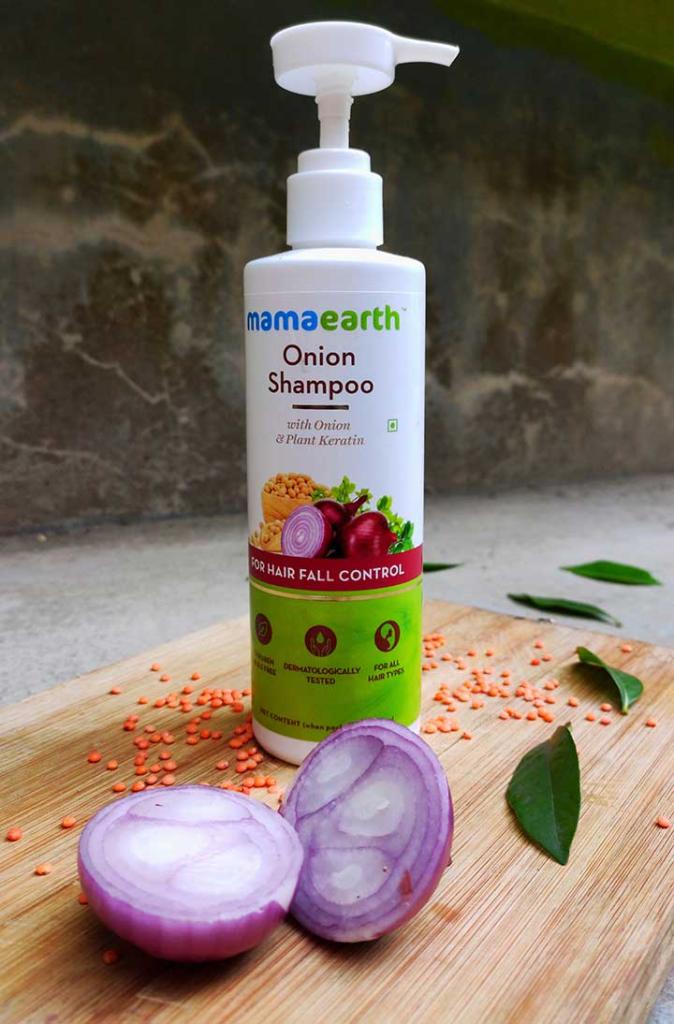
In this in-depth review, let's try to find out whether this is truly one of the best Sulphate free shampoos ever or just another hype.
Hello beauties, welcome to my arena. Today I am gonna […]