Are red light masks actually worth the money, or are they just another skincare trend dressed up in futuristic-looking hardware?
And with so many options flooding the market, how do you tell which ones actually work — and which ones just end up collecting dust after a few weeks?
These are fair questions — and the skepticism is well-founded.
Red light therapy for skin has been used in dermatology clinics for years, but the move into consumer devices has created a crowded, confusing space where misleading specs and overstated claims are common.
In this article, you’ll learn how red light masks work, what specifications actually matter, what buyers commonly get wrong, and how to evaluate whether any red light mask makes sense for your skin goals.
What Is a Red Light Mask and How Does It Work?
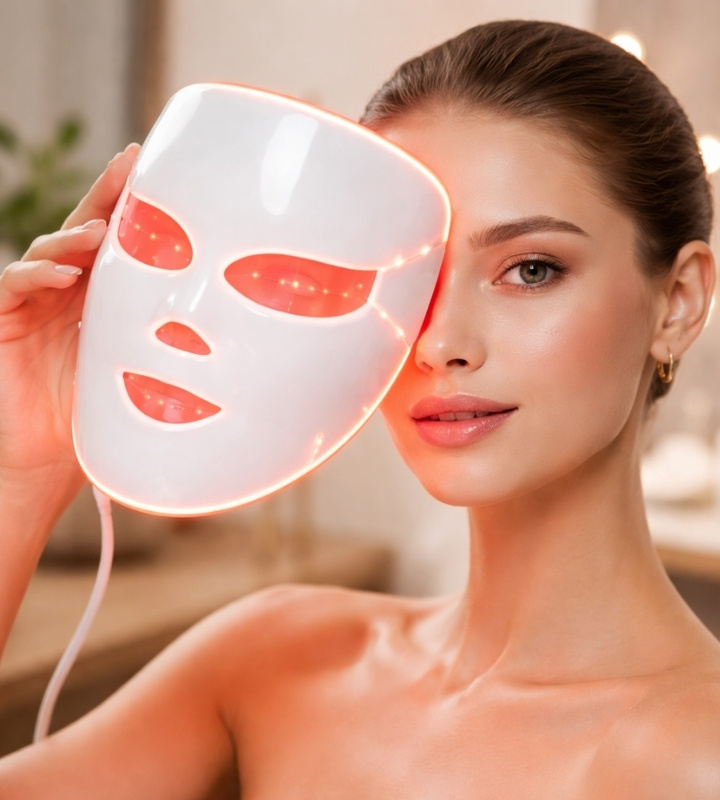
A red light mask is a wearable device that emits specific wavelengths of light directly onto the skin of your face.
Unlike UV light, which can damage skin cells, red and near-infrared light wavelengths stimulate biological processes within the skin at a cellular level.
The core mechanism is called photobiomodulation — light energy is absorbed by mitochondria in skin cells, which supports increased cellular energy production.
In practical terms, this means users may notice gradual improvements in skin tone, reduced redness, and softer fine lines with consistent use.
These are slow changes that develop over weeks, not overnight results.
Most clinical studies have used red light in the 630–670nm range for surface-level skin concerns, and near-infrared light in the 800–850nm range for deeper tissue.
Consumer-grade devices vary widely in how closely they replicate those clinical setups.
What Actually Matters When Choosing a Red Light Mask
Shopping for a red light mask based on marketing language alone is one of the most common — and most costly — mistakes buyers make.
Here’s what to actually evaluate.
Wavelengths and Their Effects
Not all light is created equal. Red wavelengths around 630–660nm are commonly associated with improvements in skin texture, tone, and fine lines — they target the upper layers of the skin.
Near-infrared wavelengths around 810–850nm penetrate deeper and are often linked to reduced inflammation and accelerated healing.
A mask that combines both offers broader coverage of skin concerns.
If a device doesn’t clearly state wavelengths in these ranges, that’s a red flag — it may not deliver meaningful results regardless of how it looks or how many LEDs it advertises.
Power and Effectiveness
A device can have hundreds of LED bulbs and still underdeliver if those LEDs are low-powered.
What matters is irradiance — the actual intensity of light delivered to the skin surface, measured in mW/cm².
Consumer-grade devices rarely publish this number clearly, which makes comparison difficult.
Without sufficient irradiance, even a well-designed mask can underperform, requiring longer sessions with minimal visible improvement.
This is where many buyers get misled. If a product focuses heavily on LED count but avoids discussing power output, that’s usually a sign the performance may not match the marketing.
Coverage
A red light mask should cover the entire face evenly, including the areas around the eyes, nose, jawline, and temples.
Uneven coverage leads to uneven results. Check whether the mask design accounts for different face shapes, and whether the LED placement is distributed across the full surface rather than concentrated in the center.
Comfort and Fit
A mask you don’t wear consistently won’t help you. Many users underestimate how much fit matters until they’ve already bought the wrong device.
A product that’s heavy, too tight, or difficult to secure properly will get used sporadically — which undermines treatment consistency entirely.
Look for adjustable straps, lightweight construction, and a design that doesn’t press uncomfortably on the nose or chin.
Ease of Use and Treatment Time
Most at-home red light masks recommend sessions of 10–20 minutes, typically three to five times per week.
A wireless, cordless design removes a practical barrier to daily use. Devices with simple controls and automatic shut-off timers are easier to build into a routine — and routine is everything with this type of therapy.
Common Problems With Red Light Masks
Understanding what goes wrong with these devices helps set realistic expectations before buying.
Poor Fit Across Face Shapes
Many masks are designed for a single, idealized face shape. Users with narrower faces, prominent noses, or wider jawlines often find that coverage is uneven.
LEDs end up aimed at the wrong angles, reducing effectiveness on the areas that need it most.
This often leads users to feel like the device “isn’t working,” when the real issue is a design limitation, not the technology itself.
Weak or Misleading Specifications
Some manufacturers list LED counts rather than actual light output. This distinction is critical when comparing devices.
A mask with 150 LEDs that delivers meaningful irradiance is more useful than one with 300 LEDs that barely registers on a light meter.
Without independent testing, it’s hard to verify claims — which is exactly why understanding wavelength ranges and irradiance matters before purchasing.
Uneven Results
Even with consistent use, some users see improvement in certain facial zones while others remain unchanged.
This is usually a coverage issue — specific areas simply aren’t receiving adequate light exposure given the mask’s design.
Overhyped Expectations
Red light therapy is not a cure for significant skin conditions, and it is not a substitute for dermatological treatment.
It’s a supplemental tool that works best when used consistently as part of a broader skincare routine.
Users who expect dramatic, rapid transformation tend to abandon devices before seeing any real results.
Where the INIA Glow Fits In
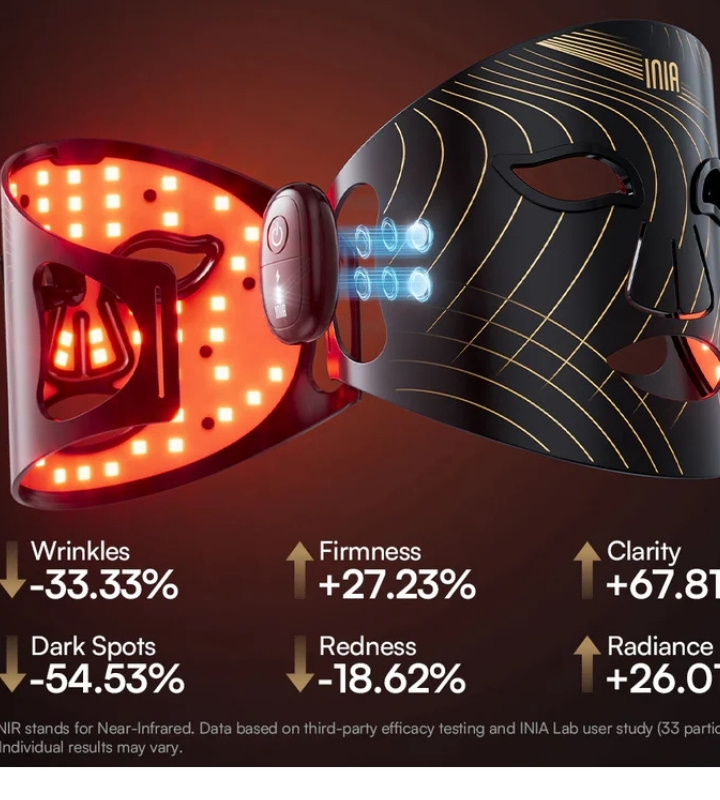
Based on the key factors that determine effectiveness — wavelengths, coverage, and usability — one example worth examining in this category is the Inia Glow wireless red light mask.
It uses both 630nm red and 830nm near-infrared wavelengths, directly covering the clinically relevant ranges discussed above.
This places it within the range of what most users would consider functionally effective for at-home use, assuming consistent application.
It operates cordlessly and includes an automatic 10-minute session timer, which removes one of the most common friction points that leads to inconsistent use.
The full-face LED design aims to address even coverage, and the lightweight build is a practical consideration for daily wearability.
You can check full specifications here.
One honest limitation worth noting: like most masks in this category, the fit may not suit every face shape equally well.
Users with very narrow faces or distinct facial structures may find the coverage less uniform than the design intends.
This is not unique to this device — it’s a challenge the category as a whole hasn’t fully solved.
Compared to higher-end clinical-grade options, consumer masks like this trade some precision and power for affordability and convenience.
On the other end of the spectrum, budget devices often cut corners on wavelength accuracy and LED quality, leading to poor results.
The mid-range space — where most daily-use masks sit — is where the balance between usability and meaningful performance tends to matter most.
Who Should Consider a Red Light Mask Like This
A red light mask is worth considering for people who:
- Are dealing with mild-to-moderate signs of aging, such as fine lines or uneven tone
- Want a supplemental, non-invasive addition to an existing skincare routine
- Can commit to consistent use over an extended period — weeks to months, not days
- Prefer a home-use option over repeated clinic appointments
It is probably not the right tool for people who:
- Have active, severe skin conditions that require medical treatment
- Are looking for quick or dramatic results
- Are unwilling or unable to use the device consistently
If you don’t fall into the first group, this type of device is unlikely to deliver meaningful value — no matter how well-designed it is.
Conclusion
The case for light masks rests on real science, but the translation from clinical research to consumer product is uneven.
Not every device that uses the word “therapy” delivers therapeutic levels of light.
The key variables — wavelengths, irradiance, coverage, and usability — matter far more than LED count or packaging.
Any mask that can’t clearly account for those four factors is a purchase worth reconsidering.
The decision ultimately comes down to whether you’re willing to invest time and money into a gradual, consistent process rather than expecting immediate transformation.
If you are, a red light mask can be a meaningful part of your routine. If you’re not, no device in this category will change that equation.
While evaluating options, start by filtering for devices that clearly meet the key criteria discussed above — particularly wavelength accuracy and real-world usability — rather than relying on surface-level feature lists.
That single shift in how you compare products will save you from the most common and expensive mistakes in this space.