25 nykaa products you are going to love in 2026
Check out all the popular launches by Nykaa. The compilation includes skincare, body care, makeup, and many other interesting products.
Avoid common makeup brush mistakes that can ruin your look. Learn the right techniques for blending, contouring and applying makeup like a pro.
By Palak Gupta
Posted on | Last Updated
Makeup brushes can completely transform how your makeup looks and lasts throughout the day.
The right brush technique creates smooth blending, seamless coverage and a polished finish.
However, even the best makeup products can look patchy, cakey or uneven when brushes are used incorrectly.
Many makeup brush mistakes are not caused by poor-quality products but by improper application methods.
From using too much pressure on the skin to skipping regular makeup brush cleaning, small makeup brush mistakes can negatively affect both your makeup results and skin health.
If your makeup never seems to blend properly or your foundation looks cakey despite trying different products, you are following common makeup brush mistakes.
Here are five common makeup brush techniques to avoid and what you should do instead for salon-perfect application at home and on the go.
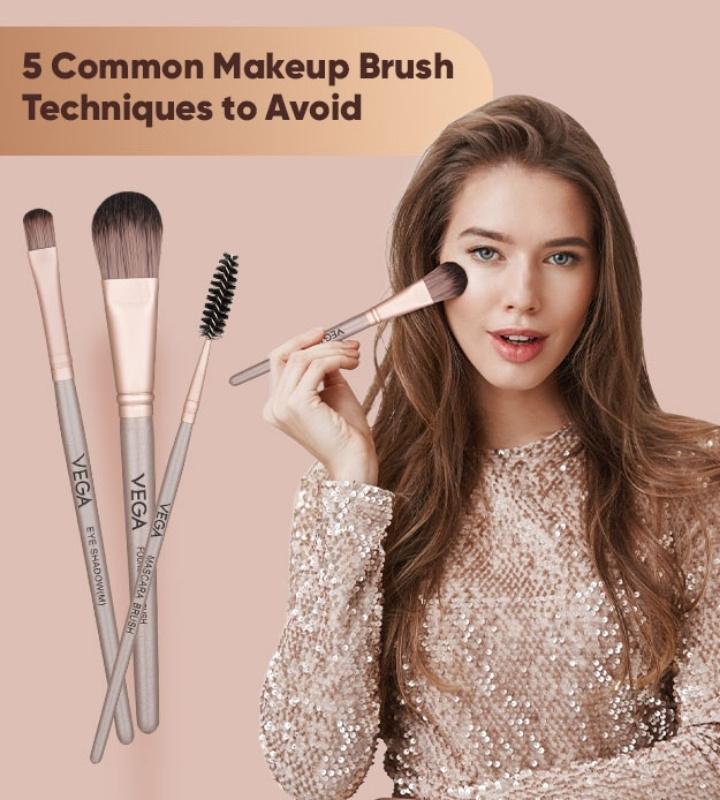
One of the most common mistakes people make is pressing brushes too hard against the skin.
Many believe that firm pressure helps products blend better. However, it does just the opposite. Applying excessive pressure can result in:
Hence, the foremost makeup brush guide is using light and controlled motions instead of pushing the brush forcefully into your skin.
For instance, use gentle buffing or stippling motions for foundation, sweep lightly across the cheeks for blush and bronzer application and blend softly in circular or windshield-wiper motions for eyeshadow.
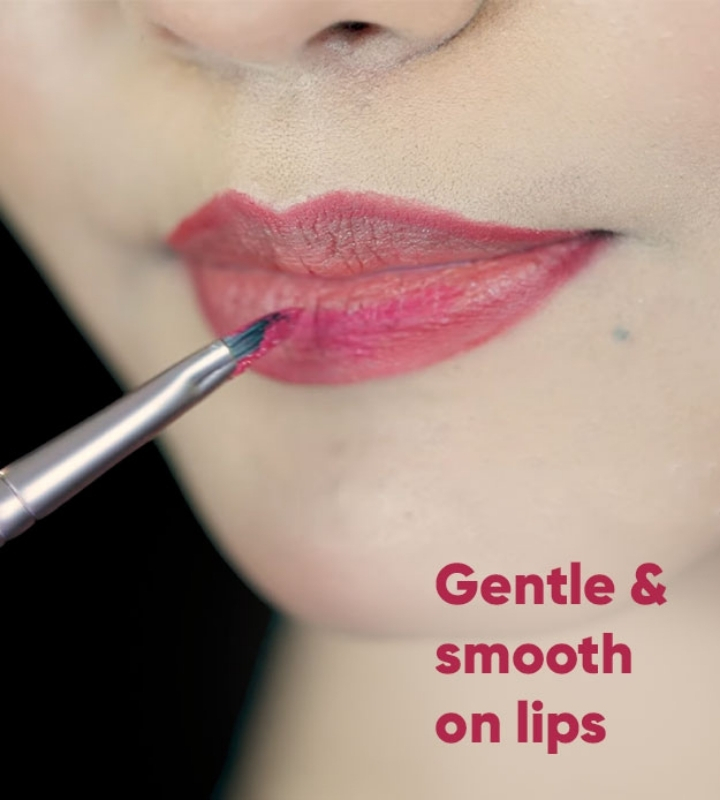
Not every makeup brush works for every product. Using the wrong type of makeup brush can make it difficult to blend and affect the final appearance.
Hence, be it the best makeup brushes for beginners or experts, the use of different brushes is important for different textures and finishes.
For instance, the Vega Lip Filler Brush is designed with soft synthetic hair in a pointed and flat head which is perfect for evenly applying and detailing lip color.
Its dual-colored synthetic hair ensures product visibility and better control during application. Similarly, you must use:
Using an overly fluffy brush for liquid foundation can cause streaking, while a dense brush for loose powder may apply too much product.
Match your Vega makeup brushes to the product type and desired finish.
Loading too much product onto a makeup brush is another common technique mistake.
It may seem faster, but it often leads to heavy, uneven makeup that becomes difficult to blend.
Overloading brushes can create harsh lines, make foundation appear cakey, cause patchy blush or bronzer, waste makeup products and make blending more difficult.
This issue is especially common with highly pigmented products like blush, bronzer and eyeshadow.
Follow better techniques on how to use makeup brushes and always start with a small amount of product.
Dirty brushes are one of the biggest hidden causes of makeup problems.
Many people continue using brushes long after product buildup, oil and bacteria have accumulated.
This is a major reason for your skin to experience breakouts and irritation.
Not cleaning makeup brushes regularly also creates patchy or muddy blending and prevents smooth product application.
In addition to maintaining makeup brush hygiene tips without fail, you must also be sure of following the right steps of cleaning your makeup brush to avoid bristle and ferrule damage.
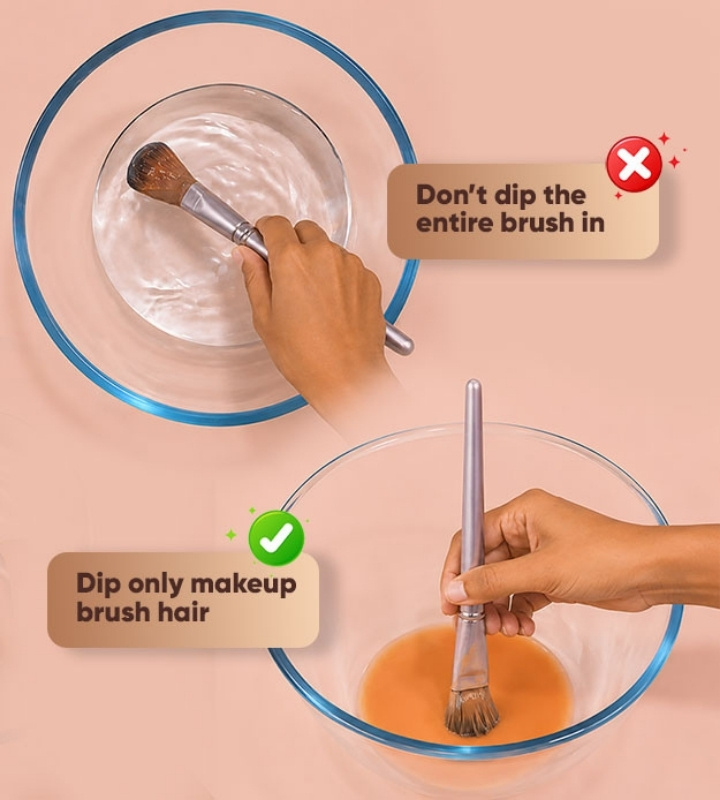
Avoid soaking the brush handle because water can loosen the glue holding the bristles together.
Clean brushes not only improve makeup application but also help products perform the way they were intended.
Last but not least on which makeup brush techniques should beginners avoid and experts must as well is using fast motions. Rushing through makeup application often leads to uneven blending and visible lines.
Quick, rough brush movements can disrupt the makeup rather than diffuse it. Harsh blending techniques can:
Some effective makeup blending methods include circular motions for foundation, windshield-wiper motions for eyeshadow, soft sweeping motions for blush/bronzer and tapping motions for concealer.
Take your time and blend in layers rather than trying to complete everything quickly.
Perfect makeup application is not only about choosing the right products but also the technique of using it.
Many common makeup frustrations come from simple brush habits that can easily be corrected.
Avoiding excessive pressure, choosing the right brush, cleaning tools regularly, applying product gradually and blending carefully can instantly improve the way your makeup looks.

Check out all the popular launches by Nykaa. The compilation includes skincare, body care, makeup, and many other interesting products.
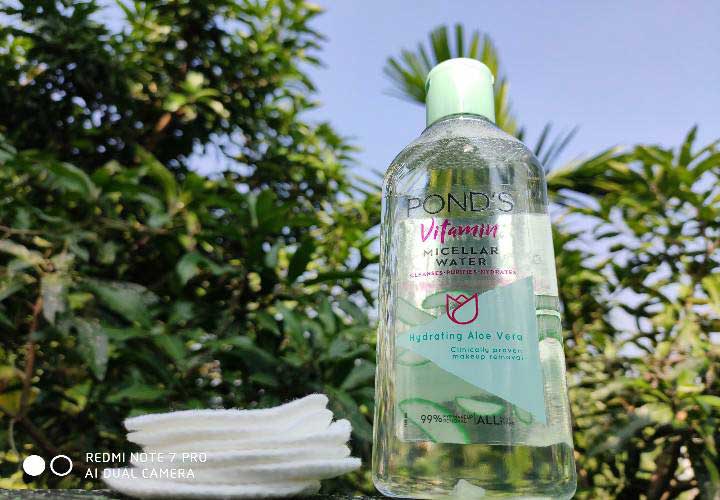
Do you want to try the new Pond's Vitamin Micellar Water Hydrating Aloe Vera? Check out the detailed review with ingredient analysis here.
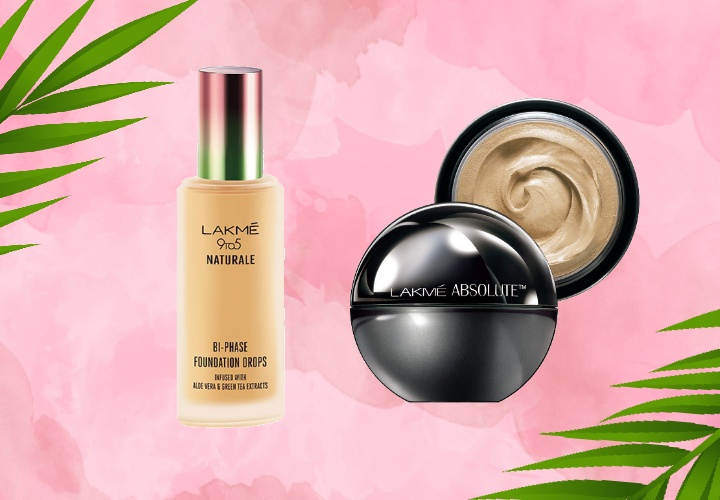
Check out the products that make this brand one of the most reputed Indian cosmetic brands ever.
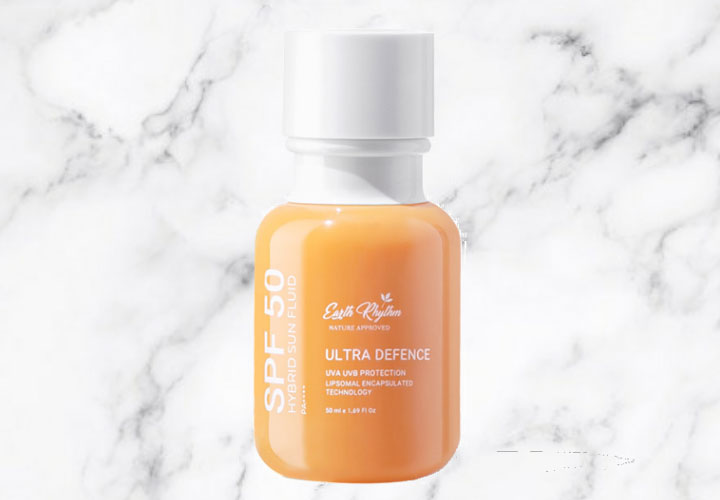
A number of products have been launched in the past few months. Here is my brief review of 4 such new skincare products and fragrances.
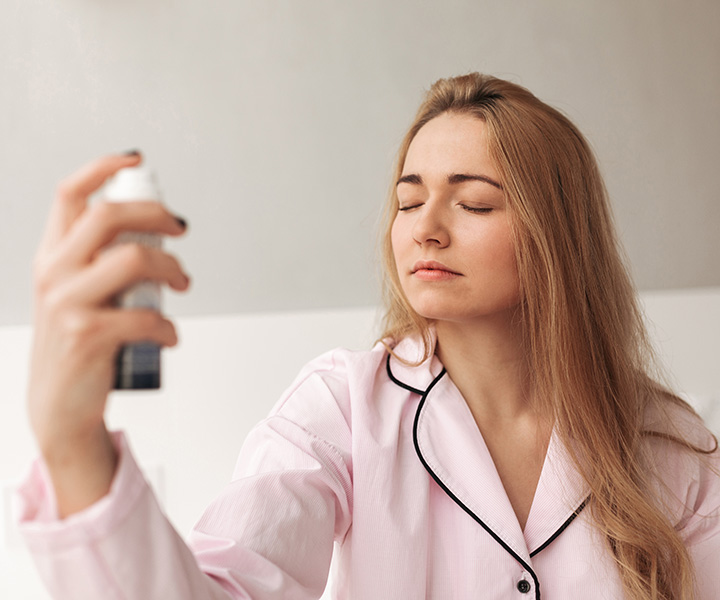
Day or night, makeup setting sprays are saviors. Let’s know more about these fixer sprays and see why you need these.
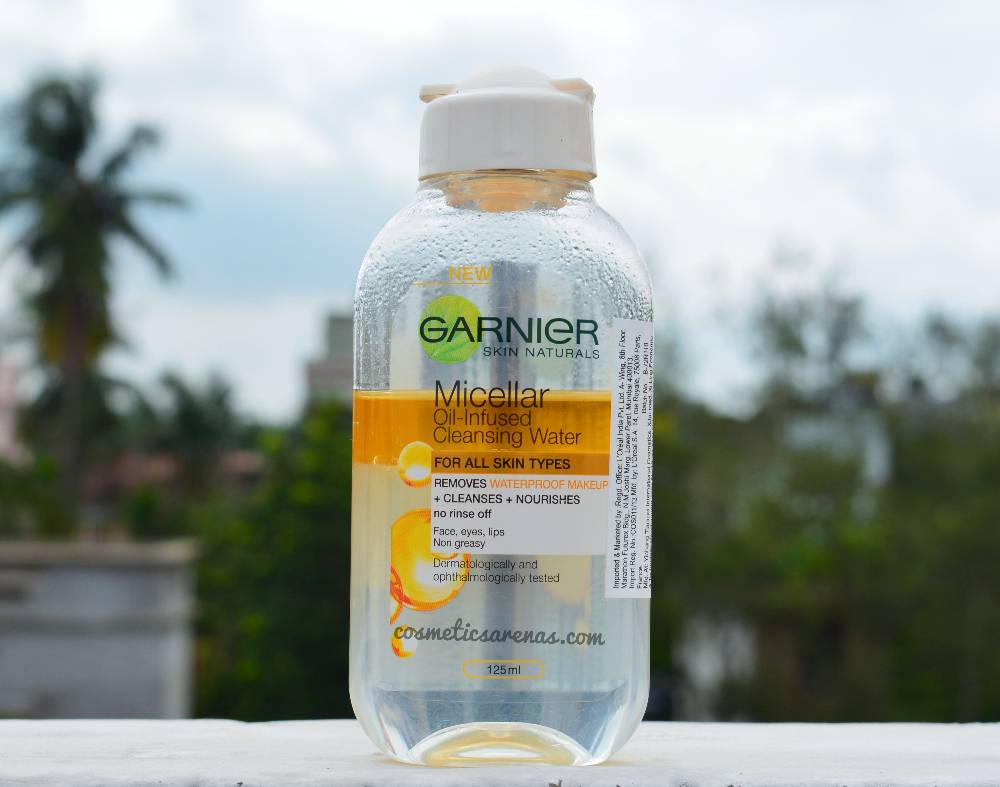
||Garnier Micellar Oil Infused Cleansing Water Review|| Welcome, Angel! So, […]
Hello my sweet and cute friends. Today my heart says […]
Lip augmentation is definitely on trend right now. But, is it safe? What are the types? In this article, know everything about lip augmentation including benefits and drawbacks.
No matter how chapped or dry your lips are, all you need to know are these few simple lip exfoliator recipes. Trust me! I have personally tried and tested out the efficacies of these. Check out yourself how nourishing and hydrating the exfoliators are.
Discover what makes makeup last all day. Learn how film formers, primers, and setting sprays work—especially in heat and humidity—for truly long-lasting results.
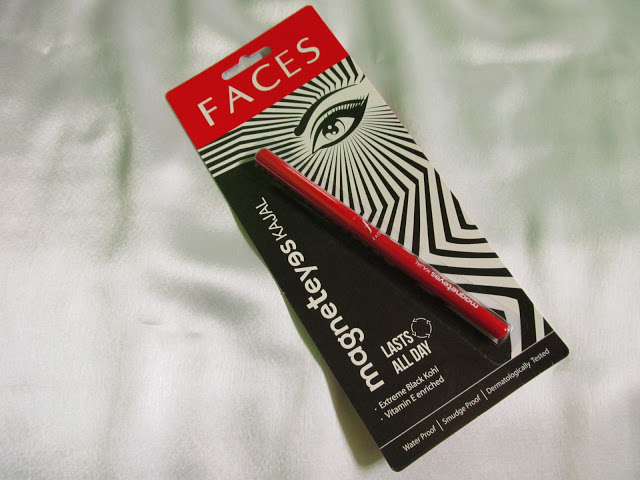
Faces Magneteyes Kajal Review Holla beauties, welcome to CA. Today […]
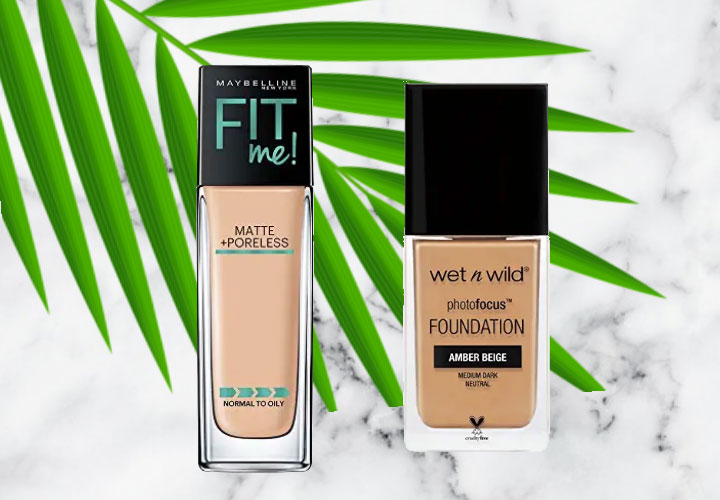
No matter what your skin type is, here, we have covered all skin tones. Get ready to ace the base. Check out the ultimate compilation of this year.