10 natural weight loss tips that you can try at home
Are you striggling to lose weight at home? Here are 10 easy tips that you can check out to lose some of those flabby layers.
For many drivers, time on the road is measured in miles, fuel consumption, or efficiency.
Yet there’s a quieter metric that rarely enters the conversation: the cumulative effect of driving on the body itself—particularly the skin.
Whether it’s daily commuting, long-distance travel, or hours spent behind the wheel for work, frequent driving creates a unique environment.
Enclosed, climate-controlled, and often overlooked, the car interior can subtly influence hydration levels, fatigue, and long-term skin health.
As automotive design evolves to prioritise comfort and connectivity, there’s a growing reason to examine how these environments affect the people inside them.

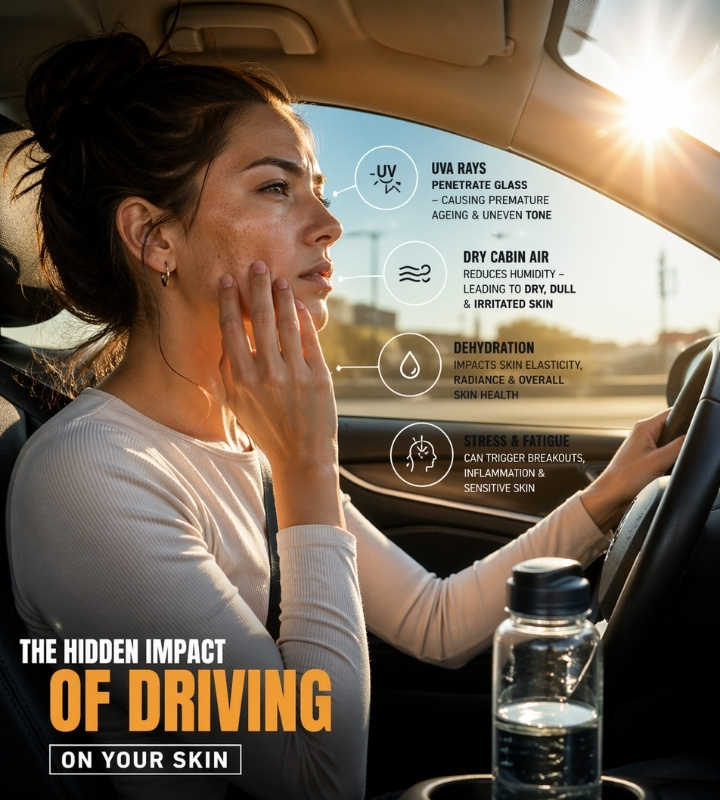
Modern vehicles are engineered for comfort, but that comfort comes with trade-offs. Air conditioning systems, while essential, tend to reduce humidity levels inside the cabin.
Over time, this can contribute to dehydration—not just internally, but visibly through dry skin.
Unlike outdoor environments where changes in temperature and airflow are more noticeable, the car creates a stable but artificial microclimate.
Drivers may not realise how long they’ve been exposed to dry air, especially on longer journeys or in stop-start traffic where ventilation is constant.
This is particularly relevant for those who drive professionally or spend multiple hours a day on the road.
The cumulative exposure can lead to dullness, irritation, and increased sensitivity, especially in already dry or urban climates.
One of the most underestimated factors in driving-related skin impact is ultraviolet (UV) exposure.
While windscreens are designed to block most UVB rays, UVA rays—responsible for deeper skin ageing—can still penetrate glass.
This means that even on overcast days or during routine commutes, drivers are exposed to low-level but consistent sun exposure.
Over months and years, this can contribute to uneven skin tone, premature ageing, and, in some cases, more serious concerns.
Interestingly, this has influenced certain aspects of automotive design. Tinted windows, UV-filtering glass, and panoramic roof coatings are increasingly common, reflecting a broader awareness of in-car exposure.
However, these features vary widely between models and are not always standard.
Driving—particularly in congested or high-pressure environments—can be mentally taxing.
Fatigue and stress are well-documented contributors to skin issues, from breakouts to inflammation.
Long hours behind the wheel often disrupt regular routines. Meals become irregular, hydration is overlooked, and sleep patterns may shift.
All of these factors have a direct impact on skin health, even if the connection isn’t immediately obvious.
There’s also a behavioural element. Drivers are less likely to reapply skincare products during a journey, and habits like touching the face—common during long drives—can exacerbate irritation or introduce bacteria.
Hydration is one of the simplest yet most neglected aspects of maintaining skin health while driving.
The convenience of being seated for long periods often leads to reduced fluid intake, either to avoid frequent stops or simply due to distraction.
Automotive interiors have adapted to this reality in small but meaningful ways.
Larger cupholders, better storage for bottles, and even cooled compartments encourage drivers to keep drinks within reach. Yet the habit itself still requires conscious effort.
From a practical standpoint, regular hydration supports not only skin appearance but also concentration and overall comfort—making it relevant from both a health and safety perspective.
As awareness grows around lifestyle and wellbeing, drivers are beginning to consider how their habits behind the wheel affect them beyond the journey itself.
This shift mirrors broader trends in automotive culture, where personalisation and identity extend beyond aesthetics.
For drivers investing in how their vehicles reflect their lifestyle, companies like Number 1 Plates have seen increasing interest from motorists who view their cars as an extension of who they are.
That mindset is gradually expanding to include wellbeing considerations—how the car feels, functions, and supports daily routines.
This doesn’t necessarily mean radical changes. Often, it’s about small adjustments: keeping skincare essentials accessible, choosing routes that allow for breaks, or simply being more aware of environmental factors inside the vehicle.
Addressing the link between driving and skin health doesn’t require a complete lifestyle overhaul. Instead, it’s about integrating manageable habits into existing routines.
Applying a lightweight SPF before driving, even on cloudy days, can help mitigate long-term UV exposure.
Keeping a reusable water bottle within reach encourages regular hydration. For longer journeys, taking short breaks allows both the body and skin to reset.
There’s also value in considering the vehicle itself. Features like UV-protective glass or adjustable climate settings can make a subtle but meaningful difference over time.
As consumers become more informed, these factors may play a larger role in purchasing decisions.
The relationship between driving and skin health is part of a larger conversation about how modern mobility shapes daily life.
Cars are no longer just tools for transport; they are environments where people spend significant portions of their time.
Understanding the hidden impacts of that environment—whether physical, mental, or behavioural—adds depth to how we think about automotive design and usage.
It also reflects a shift in priorities, where comfort is not just about convenience, but about long-term wellbeing.
Frequent driving brings with it a set of subtle, cumulative effects that extend beyond the road.
From dehydration caused by climate control systems to ongoing UV exposure through glass, the impact on skin health is real, if often overlooked.
As drivers become more aware of these factors, small changes in habit and perspective can make a meaningful difference.
In a landscape where vehicles are increasingly tailored to individual lifestyles, recognising the connection between travel habits and personal wellbeing feels like a natural next step.

Are you striggling to lose weight at home? Here are 10 easy tips that you can check out to lose some of those flabby layers.

In this fast pacing world, online dentistry is quite a popular method for treating all oral health issues remotely. But whether the method is reliable or not, know here.

Good photos do not define a picture-perfect look. Rather, the attributes come from inside. In this guide, know how to look good in every photo with a few professional tips and tricks.

Properly collected Rainwater is beneficial for our health and it has been proven repeatedly. But, did you know that it is beneficial for your pet as well? Take a look.

While a sun-kissed glow is often associated with health and vitality, excessive exposure to the sun's UV rays can be detrimental. Check out how these 10 simple tips can help you minimizing the risk of tanning and other dangers.

Is Whiplash pain in the neck giving you sleepless nights? Do not worry anymore! Here are 10 top-tier tips to speed up your recovery from this unbearable sharp pain.

It was a roller coaster ride for sure. Check out how I managed to survive pretty well in this blogging world for the last 5 years where every turn is challenging.

It is not easy to pick up the right gift for the beauty buffs. This article will give you top 10 gift ideas to impress that beauty lover friend in your life.

After crossing 50, it becomes difficult to grow hair. Well! If you are a quinquagenarian, here is a guideline on how you can do that.

Every year the Great Indian Festival on Amazon offers a number of amazing deals and crazy offers. Take a look at my wishlist for this year where I have added 5 interesting things.

Non-surgical facelift techniques are quite popular these days. Keep reading to know about the 6 well-known techniques, benefits, and a brief comparison guide.
These days, many women who want youthful skin are turning to Sculptra. Explore the benefits, process, cost, and safety of this surgery-free technique,