Makeup magic: step-by-step guide to start your youtube journey
Whether you're a seasoned makeup artist or a beginner, our step-by-step guide will help to make your mark on YouTube in the makeup & beauty niche.
Discover how an AI image editor can improve beauty and product photos through better lighting, backgrounds, retouching, composition, and realistic editing.
By Keith Myers
Posted on | Last Updated
A good beauty photo is rarely just about having the latest phone or an expensive camera.
Lighting, background, colours, composition, skin texture, product placement and even the small details around the subject can completely change how a picture feels.
This becomes especially important when photographs are being used for beauty blogs, social media, online stores, or personal portfolios.
A lipstick may look ordinary in one photograph and beautifully presented in another simply because the framing and light are better.
An AI Image Editor the one integrated within Higgsfield, an AI creative suite, can make some of these adjustments easier for visual editing and content creation.
Instead of spending a long time learning complicated editing controls, users can make selected changes with simpler instructions and automated assistance.
The goal, however, should not be to make every picture look artificial.
Good editing should improve the photograph while allowing the subject to remain believable. For beauty and product photography, that balance matters more than dramatic effects.
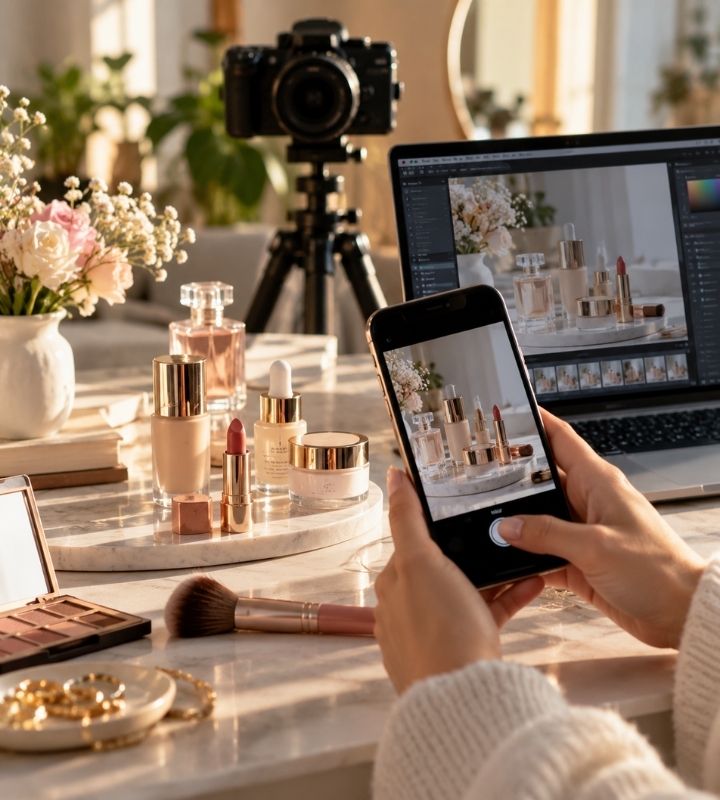
Editing cannot completely rescue every poorly captured image. Before opening an AI Image Editor, try to get the basics right.
Natural window light can work beautifully for skincare and makeup photographs, while a simple background can keep attention on the product.
Clean the lens of your camera to avoid shadows that are harsh and ensure that the primary object is properly framed.
If you’re taking pictures of a jar of cream, lipstick or perfume bottle product for skincare, make sure the label is in front of the camera and isn’t obscured by objects that aren’t necessary.
The more professional the image, the more editing is usually required.
This is also a good reminder for bloggers who are interested in beauty. Editing should be the final step, not an alternative for a thoughtful photograph.
Background clutter can be one of the easiest things to forget about. A beautiful bottle of serum can get lost in the shuffle when covered in cables, packaging items, bathroom products, and other things.
A clear background instantly provides the image with an organized appearance.
The AI Image Editor will help you remove distractions or simplify areas of a photo while keeping the focus on the subject.
Imagine, for instance, taking a picture of an eye moisturiser in front of an open window. A wire, chair or bottle unrelated to it may show up behind it.
Instead of taking the picture multiple times it is possible to selectively edit the image to remove the distraction. The most important thing is to be moderate.
The background must look neat however it shouldn’t appear so perfect that the photo is sloppy and loses its originality.
Color accuracy is crucial for products that are used in the beauty industry. Think about the shades of lipstick and blushes, foundation tones and eyeshadows and even the packaging.
If editing alters the colour too significantly, the final image could not reflect the real product.
An AI Image Editor can assist with contrast, brightness white balance and brightness image enhancement, however these adjustments must be made cautiously.
For product photographs, ask yourself a simple question:
Does the edited image still look like the product in real life?
If the answer is no, the editing has probably gone too far. This is especially important for beauty content because readers often use photographs to understand colour, texture, finish and packaging before deciding whether something interests them.
Photography that is beautiful usually requires some amount of retouching however there’s a huge difference between making photos appear polished and taking out all natural details.
An AI Image Editor may help reduce distracting elements as well as balance lighting and create a better exposure.
The natural texture of skin is not something to be treated as a thing that has to disappear. Skin imperfections, pores, tiny freckles and minor variations are a normal part of the skin.
Personal beauty photos small adjustments are usually better than a lot of smoothing.
A small amount of correction can enhance the overall look of the photo, while making the person appear as they do.
This is crucial for beauty bloggers who wish their readers to believe in their content.
The over editing of photos can lead to unrealistic expectations, particularly when the subject is skin care.
Lighting determines how a beauty photograph feels. Soft light can make skincare photography look fresh and clean.
Warmer lighting may create a cosy lifestyle mood, while brighter lighting can work well for makeup tutorials and product flat lays.
If the original photograph is slightly dark, an AI Image Editor may help improve exposure and balance highlights and shadows.
The trick is not to make everything extremely bright.
Overexposure can remove details from white packaging, shiny bottles and lighter skin tones.
Similarly, excessive contrast can make colours appear harsher than they actually are.
Think of editing as bringing the photograph closer to what you saw when you took it rather than creating an entirely different scene.
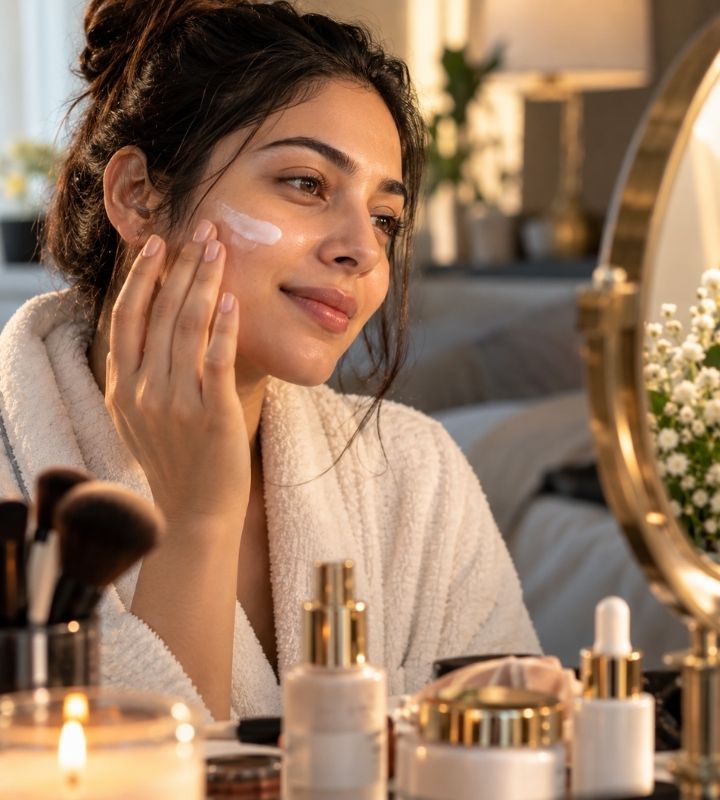
Consistency can make a beauty page look much more polished. If one photograph has a warm background, another has a cool blue tone and the next is extremely bright, the overall feed may feel disconnected.
An AI Image Editor can be useful for making small adjustments across a collection of photographs. You can aim for similar brightness, cropping, background treatment and overall mood.
This does not mean every photograph needs to look identical. Instead, think about creating a visual thread that connects your content.
It might mean soft natural lighting and neutral backgrounds for a skincare page. For makeup content, you might prefer brighter colours and stronger close ups. For lifestyle beauty content, a warmer and more relaxed look may work better.
A product doesn’t always need to be photographed against a plain white background.
Beauty products can become more interesting when placed in a believable lifestyle setting.
A perfume bottle could be photographed beside jewellery and a small mirror. A moisturiser could sit near a folded towel and a plant. A lipstick could be paired with a makeup pouch and a few brushes.
An AI Image Editor can help experiment with background ideas or compositions when a creator wants to explore different visual directions.
However, edited backgrounds should still make sense. If a product is supposedly sitting on a bathroom counter, the lighting and shadows should look believable.
A background that obviously does not match the subject can make an otherwise attractive photograph feel artificial.
Sometimes the hardest part of photography is deciding what the final images should look like.
A mood board can help.
You might collect ideas around:
An AI Image Editor can support this creative stage by helping transform or refine visual references before a full photography session.
For example, someone planning a festive beauty campaign might explore warm gold tones, flowers, traditional accessories and soft lighting before deciding on the actual setup.
This can save time because the creative direction becomes clearer before photographs are taken.
Higgsfield can be considered when creators want to explore more dynamic visual concepts around beauty campaigns.
Rather than treating it as a replacement for normal photography, it can sit within the broader creative process.
For example, a beauty creator might already have a product photograph and want to explore how that visual could translate into a short moving concept for social content.
Higgsfield may also be useful when experimenting with cinematic movement and visual storytelling around a campaign idea.
The important point is to evaluate the result based on the needs of the project rather than assuming one platform will work for every type of beauty content.
There is a temptation to remove every imperfection from a beauty photograph. But perfection can sometimes make an image less appealing.
A slightly imperfect photograph can feel warmer and more believable than an image with completely flawless skin, unrealistically smooth surfaces and exaggerated colours.
An AI Image Editor should therefore be used with a light touch. Ask what actually needs improvement.
Maybe the background is distracting. Perhaps the lighting is uneven. Maybe the product needs slightly better positioning. These are useful problems to solve.
Changing everything simply because the software allows it can make the final image less convincing.
Beauty content often sits somewhere between editorial photography and product information.
That means accuracy matters. If you are photographing a foundation, don’t change the shade until it looks dramatically different from the real product.
If you are showing a lipstick, don’t alter the colour simply to make it more attractive.
An AI Image Editor can help polish the presentation, but it should not be used to create a misleading representation of what someone will actually receive.
This is especially important for bloggers and creators who regularly discuss products. Readers should be able to distinguish between a creative image and an accurate product photograph.
One photograph may need to work in several places. A wide image can be useful for a blog header.
A square crop may work better for a social media post, while a vertical version may be more suitable for stories or short form platforms.
An AI Image Editor can make it easier to explore these different compositions without starting from scratch each time.
When cropping, keep the main subject visible and avoid cutting important product details.
For a lipstick photograph, for example, the product itself should remain the visual focus rather than disappearing into a large decorative background.
The best beauty photographs often communicate more than “here is a product.”
They create a mood. A morning skincare photograph might suggest freshness and simplicity. A festive makeup image might feel colourful and celebratory.
A fragrance photograph might communicate elegance through lighting and surrounding details.
An AI Image Editor can support this kind of visual storytelling by helping creators refine backgrounds, composition, lighting and small details. But the story should begin with the creator’s idea.
The tool can help execute the concept; it should not determine the entire creative direction.
Higgsfield can also be explored when a static beauty concept needs a more cinematic direction.
A creator could experiment with movement around a product, a changing camera perspective, or a short visual sequence intended for social media.
Higgsfield is therefore better viewed as one possible part of a wider creative workflow rather than the centre of a beauty strategy.
The same principle applies when combining different creative tools: choose them according to the content you actually need.
Even simple editing can go wrong.
Here are some mistakes worth watching for:
An AI Image Editor may make these changes easier, but the final decision should always come from the person reviewing the photograph.
A useful test is to compare the edited version with the original after taking a short break. If the edited version immediately looks artificial, reduce the effect.
Beauty content has changed considerably. Readers are increasingly interested not only in polished photographs but also in honest experiences and realistic expectations.
That makes authenticity valuable. If you are creating product photography for a blog, show the product clearly.
If you’re creating a beauty tutorial, avoid presenting heavily altered images as though they represent an untouched result.
An AI Image Editor can help improve presentation without compromising honesty.
That distinction is particularly important for skincare and makeup content, where photographs can influence how people perceive a product or their own appearance.
Higgsfield can be useful when a beauty campaign needs more than a conventional still image and the creator wants to explore motion, atmosphere, or cinematic visual ideas.
For a simple product review, however, an ordinary well lit photograph may be more appropriate.
The right choice depends on the purpose of the content. A review needs clarity. A social campaign may need creativity.
A mood board needs inspiration. A product catalogue needs accuracy.
Different visual goals naturally require different approaches.
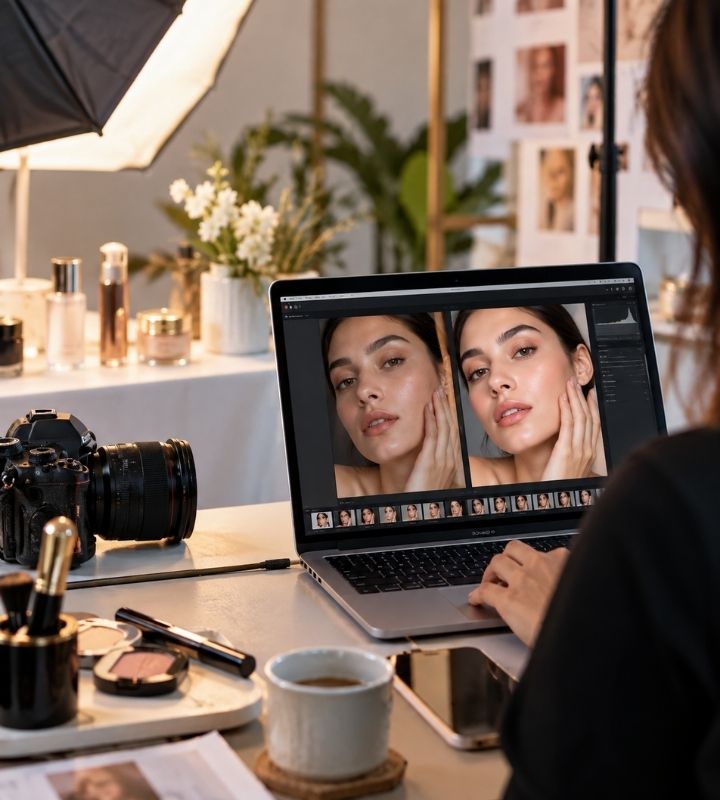
Beauty photography isn’t about creating flawless images. It’s about showing the subject in a clear manner and creating a pleasing atmosphere and providing the viewer with an honest understanding of what they are gazing at.
The AI Image Editor will assist in numerous small elements of this process, from cleaning up backgrounds and balancing lighting to experimenting with various designs.
It is a good tool to aid creative exploration when the project requires more fluid visual concepts, however it is only an option in a crowd of other options.
The most effective images typically begin with a clear concept, careful composition, appropriate lighting and a clear appreciation of the viewers. Editing follows.
Photos of products and beauty that are better are not always a requirement for expensive equipment or complex editing techniques. Sometimes, a few minor tweaks can are the most significant impact.
An AI Image Editor allows you to make these adjustments easier to access, especially for those who write blogs, beauty writers as well as small scale businesses and those who manage themselves and their social media accounts.
The goal shouldn’t be to completely erase all imperfections. Instead, edit to enhance clarity, balance and overall appearance while making sure the photo is believable.
It could be worth a look for more innovative visual experiments especially when a static beauty concept requires movement or a cinematic interpretation.
The most beautiful image is one that draws attention but does not mislead the person looking at it.
When well thought out photography is combined with a careful editing process and editing, the final image can appear elegant, yet still feel authentic.
Whether you're a seasoned makeup artist or a beginner, our step-by-step guide will help to make your mark on YouTube in the makeup & beauty niche.
Learn what a Beauty SEO Company does and how it helps salons and skincare brands in Singapore attract local clients and grow online visibility.
Welcoming 2026 with gratitude, hope, and heartfelt thanks. Celebrating 9 beautiful years of Cosmetics Arena and the readers who made it possible.

It was a roller coaster ride for sure. Check out how I managed to survive pretty well in this blogging world for the last 5 years where every turn is challenging.

Do I always go for sponsored reviews? Do I review every other brand and its products? Check out how I work with brands and also know the principles I follow.