How does orthodontic treatment work? a brief insight from an expert
Do you want to correct your dental alignment, but are not sure how to get the right brace? In this article, check out how an expert does orthodontic treatment.
Learn how to make homemade scented candles with soy wax and discover 15 beautiful fragrance combinations, practical tips, supplies, and candle-making steps.
By Keith Myers
Posted on | Last Updated
You can easily customize the scent and ingredients of scented candles by making them at home.
Create combinations that suit different rooms, seasons, or moods with a simple soy wax base and a favorite fragrance.
As you learn how different waxes, wicks, and fragrances interact, you can adjust your approach.
You can have a lot of fun when you experiment with scent combinations beyond single-note candles.
In contrast with lavender and vanilla, grapefruit and basil combine to create a brighter and less expected fragrance.
By using the right materials and doing some testing, you can create candles that smell great while burning and while in the jar.
You’ll find 15 homemade scented candle ideas here, along with the supplies you’ll need, a simple making process, and practical tips for making your candles smell better.
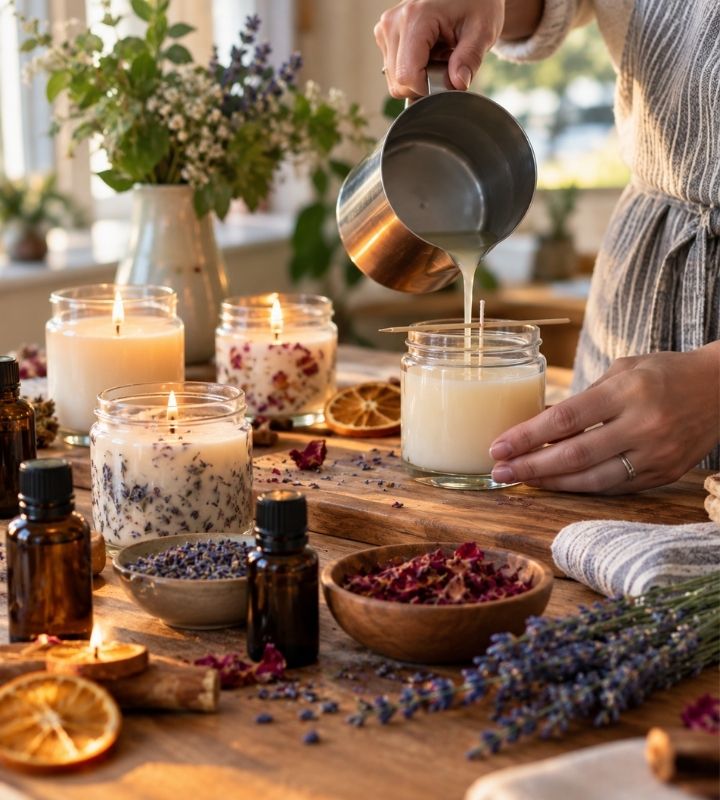
You do not need a complicated setup to make your first scented candle. Start with a few basic supplies.
It is important to pay attention to fragrance oil because not every scent material works well in candles.
A candle fragrance oil must be formulated and tested for its intended use, whereas an essential oil can react differently with wax and heat.
Make sure essential oils are suitable for candle making and follow the supplier’s instructions if you plan to use them.
Measure your fragrance oil by weight rather than estimating the amount.
Some candle makers start with around 6 to 10 percent fragrance load, but the appropriate level depends on the wax and fragrance.
Check the maximum fragrance load that your specific wax and fragrance supplier recommends before you begin.
A good scent combination usually balances different types of fragrance notes rather than relying on two strong scents competing for attention.
You can use these ideas as starting points, then adjust the proportions in small test batches until you find a blend you like.
Lavender gives this blend a soft floral character, while vanilla adds warmth and sweetness.
The combination works well in bedrooms, reading areas, and other spaces where you want a gentle, relaxing fragrance.
Eucalyptus brings a clean, fresh quality, while mint adds a cooler and sharper note. Try this combination in bathrooms, home offices, or entryways when you want a crisp scent.
Both fragrances bring woody notes, but they offer different textures.
Cedarwood adds a dry, earthy quality, while sandalwood gives the blend a smoother and creamier character. Use this pairing when you want a warm, grounded candle.
Orange provides brightness and citrus freshness, while clove adds warmth and spice.
Together, they create a cozy fragrance that works particularly well during cooler months without relying entirely on traditional holiday scents.
Lemon adds a bright citrus note, while rosemary brings an herbal character.
This combination suits kitchens, dining areas, and other spaces where you want a fresh scent with a little more depth.
Vanilla brings softness and sweetness, while sea salt creates a lighter, cleaner impression.
The combination works well for a relaxed, coastal-inspired candle without making the fragrance feel overly tropical.
Pine contributes a fresh, outdoorsy note, while cinnamon brings warmth and spice. The pairing works well for seasonal candles and can create a winter-inspired fragrance without making the candle feel limited to the holiday season.
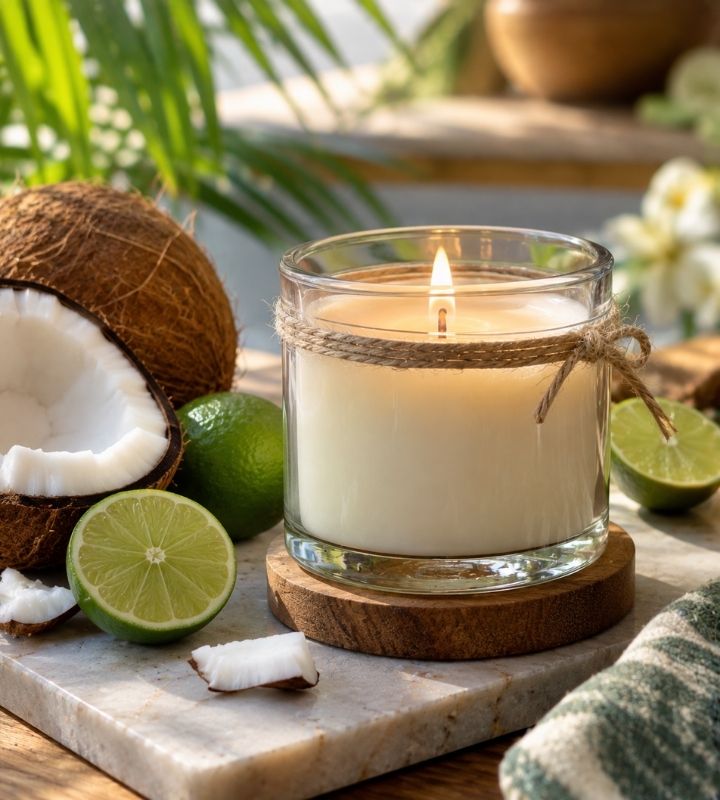
Coconut gives the blend a creamy quality, while lime adds a sharp citrus note.
Together, they create a light tropical fragrance that works particularly well in kitchens, bathrooms, and summer-inspired spaces.
Patchouli gives the blend an earthy and slightly rich character, while bergamot adds a fresh citrus lift.
This combination works well when you want a candle with more depth but still want a noticeable fresh note.
Apple adds a fruity sweetness, while clove introduces warmth and spice. The two create a familiar autumn-inspired fragrance that works well in living rooms and other shared spaces.
Jasmine gives the candle a distinct floral character, while sandalwood creates a warm base. The woody note can help balance the floral fragrance, making this a good option for those who enjoy floral candles with a richer finish.
Grapefruit brings tart citrus freshness, while basil adds an herbal note that makes the blend more unusual.
Try this combination when you want something bright and modern rather than a traditional floral or sweet fragrance.
Fig adds soft fruitiness, while cedar gives the fragrance a dry, woody edge.
This understated combination works well in living rooms, offices, entryways, and other spaces where you want a subtle scent.
Peppermint and eucalyptus both offer cool, fresh notes, creating a noticeably crisp fragrance.
This pairing can work well in home offices and bathrooms or whenever you want a candle with a sharper scent profile.
Vanilla adds sweetness and smoothness to the deeper character of tobacco. The result feels warm and sophisticated, making this combination a good fit for studies, reading areas, and cozy evening spaces.
When you create your own combinations, start with small amounts instead of committing to a full batch.
You can begin with two parts of your main fragrance note and one part of the supporting note, then adjust the blend after testing it.
A pre-tested Homemade Candles can also give you more options when you want to experiment with different scent profiles without starting from scratch.
Once you choose your wax, fragrance, wick, and container, follow a straightforward process.
Always check the instructions for your specific materials because different waxes and fragrances can have different temperature and usage requirements.
Secure the wick in the centre of your container and keep it upright. Let the adhesive or wick sticker set before you pour the wax.
Measure the amount of wax you need and melt it according to the manufacturer’s recommended temperature.
Use a thermometer so you can monitor the wax instead of relying on appearance alone.
Once the wax reaches the temperature recommended for fragrance addition, weigh your Candle Fragrance Oils and mix it thoroughly into the wax. Stir gently and consistently so the fragrance distributes evenly.
Check the recommended pouring temperature for your wax and pour the mixture slowly into the prepared container. Avoid moving the container while the wax cools.
Give the candle enough time to cool and settle before you move on to testing. Follow your wax supplier’s recommended curing period because different wax and fragrance combinations can require different amounts of time.
Light the candle after the recommended cure period and observe the flame, melt pool, scent throw, and overall burn.
Test the candle before producing a larger batch, especially when you change the fragrance, wick, wax, or container.
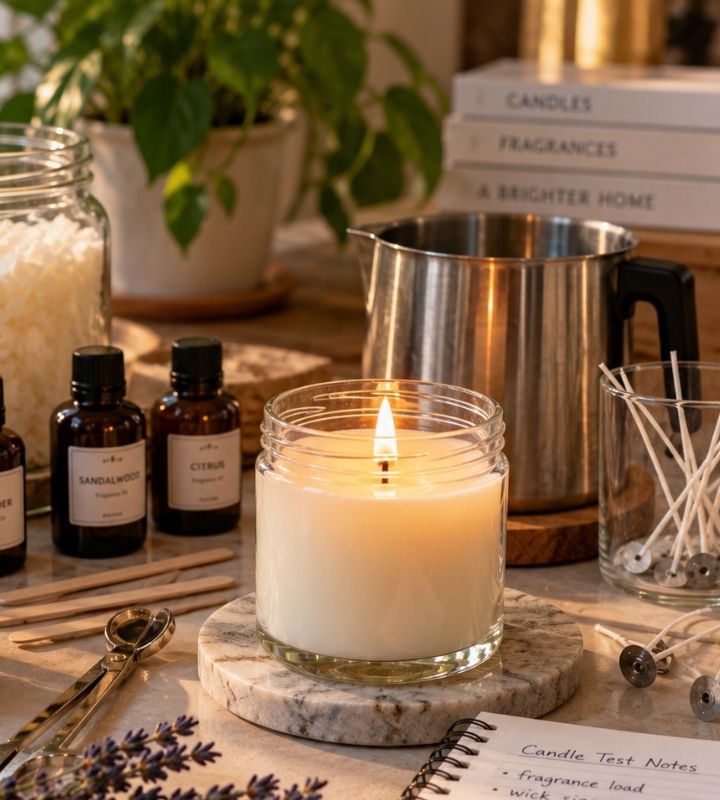
A Homemade Candle’s scent performance depends on more than the amount of fragrance oil you add.
The wax, fragrance, wick, container size, fragrance load, and curing time can all affect how much fragrance the candle releases while burning.
Start by choosing a fragrance that works well with your wax.
Different fragrance oils can perform differently in the same wax, so testing gives you a more reliable answer than simply choosing a scent based on how strong it smells in the bottle.
Next, check your fragrance load. Adding more fragrance does not automatically produce a stronger candle.
If you exceed the amount your wax can properly hold, you may create other performance problems instead of improving the scent.
Your wick also affects fragrance performance. A wick that is too small may not create enough heat to form a suitable melt pool, while a wick that is too large can produce excessive heat, soot, or an unstable flame.
Test different wick sizes with the same wax, fragrance, and container to find the best match.
Give the candle enough time to cure before you judge its scent. Some waxes need several days or longer to develop their best fragrance performance.
Follow the recommendations for the specific wax and fragrance rather than applying one fixed curing period to every candle.
Finally, burn test your candle. Check both cold throw, which refers to the fragrance you notice before lighting, and hot throw, which refers to the fragrance you notice while the candle burns.
This comparison can help you understand whether your fragrance combination performs well in the finished candle.
Even simple candle-making projects can run into problems. Knowing the common mistakes can help you avoid wasting wax and fragrance.
Using too much fragrance oil: More fragrance does not necessarily mean more scent. Follow the maximum fragrance load recommended for your wax and fragrance.
Choosing the wrong wick: A wick that works well in one container may not perform the same way in another.
Consider the wax, fragrance, container diameter, and other variables when choosing your wick.
Testing the candle too soon: A freshly poured candle may not show its final fragrance performance.
Give it the recommended curing time before you evaluate it.
Skipping the burn test: A candle can look perfect before you light it and still develop problems during burning.
Test each new combination before making a larger batch.
Ignoring the first burn: Give the first burn enough time to develop an appropriate melt pool for the container.
A very short first burn can contribute to tunneling and leave excess wax around the sides.
Ignoring the wax manufacturer’s instructions: Different waxes have different recommendations for melting, fragrance addition, and pouring.
Follow the instructions for the specific wax instead of applying one temperature range to every formula.
Create Your Own Scented Candles – At Home!
Making scented candles at home becomes easier once you understand how the main components work together.
Start with a few of the scent combinations above, test them in small batches, and keep notes on your wax, fragrance load, wick, container, and results.
As you gain experience, you can adjust your blends and create candles for different rooms, seasons, and occasions.
A consistent supply of wax and fragrance oils can also make it easier to repeat combinations that perform well.
Suppliers such as Makesy offer candle-making materials and fragrance oils that can help you continue experimenting with new scents.

Do you want to correct your dental alignment, but are not sure how to get the right brace? In this article, check out how an expert does orthodontic treatment.
Explore the hazardous side of Magnesium and other electrolytes Deficiencies. Also know the list of nutrients that can treat this problem.

Invisalign or traditional braces, which is better and why. Let's explore all the details in this article.
Hello sweethearts! Today I am gonna review Juicy Chemistry Ylang Ylang […]

The year 2021 has made me experience a number of amazing things. It was eventful as a whole. Here I have shared three of such special moments.

Explore the trendiest hime cut hairstyle, its history, maintenance, and many other tips about one of the most popular hairstyles ever.

Electrolysis and laser hair removal are popular lasting hair removal methods. But how are they different? Which one is better? Know the answers here.

GetMoreGirth offers a safe, nonsurgical penile girth enhancement. Learn how this discreet treatment helps men boost confidence with natural-looking results and zero downtime.
Hello my beautiful readers. Welcome to Cosmetics arena. Yesterday I […]

In this article, we will explore what spinal cord compression is, the 3 main causes, symptoms, treatment, preventions, and more such things.

Improve your focus with six daily wins—from removing distractions to better sleep and simple calming habits. Know all these small changes.

From road trip essentials to personal memories, discover how small details, comfort choices, and travel habits turn an ordinary car into a meaningful travel vehicle.