Electrolyte hydration: facts vs. myths debunked
So many folks are unsure whether to take electrolytes or water to stay hydrated. Keep reading to debunk some common electrolyte myths.
Discover how community fitness and group workouts are transforming traditional gyms and helping people stay motivated and committed to fitness.
By Keith Myers
Posted on | Last Updated
The majority of individuals who terminate their gym subscription do not do so because they lost interest in staying in shape.
They do so because they lacked any incentive to stay. No one missed them if they didn’t show up. No one even recognized them.
The gym of the future, which is actually already here, isn’t in the business of leasing gear; it’s in the business of leasing a tribe.

The traditional concept of a large gym was based on a fundamental principle: here is the equipment, solve the problem.
Customers entered, did their thing, and left. It was a totally transactional relationship, a monthly payment for using the machines.
This concept still survives, but it is not what retains customers or generates positive word-of-mouth.
The most popular gyms, with waiting lists and long-time faithful customers, have turned to another strategy. They have created atmospheres where the training session is the method, not the goal.
Mutual accomplishment, completing a tough set as a group, keeping up with the person next to you during a sprinting exercise, leads to a completely different experience than training on a treadmill on your own.
Many people feel lonely these days as they don’t have many close friendships or meaningful daily interactions.
The fitness studio met this need in a way, with a class environment where you could meet the same people regularly and have an instructor who knew you well.
This created a sense of community. The studio then became your “third place”.
Not home, not work, but somewhere where everybody knows your name and everyone is genuinely pleased to see you.
According to the Journal of the American Osteopathic Association, group fitness attendees had a 26.2% reduction in stress and significant increases in physical, mental, and emotional health compared to those who worked out alone. This isn’t a slight difference. This is night and day.
One aspect of the instructor-led model that doesn’t get enough credit is that it removes decision fatigue completely.
A standard gym and you walk in the door, and you’re immediately confronted with a series of minor choices: what muscle group, what machine, how many sets, what order.
For most people, who have already spent the day making countless decisions, that’s overwhelmingly draining before the actual exercise even begins.
None of that friction exists in a group class. The decision has been made for you. You show up, you follow, you work.
The ease of that formula makes group classes a far lower barrier to entry for people new to exercising, and keeps the vast majority of members who stick with it returning several days a week consistently.
Accountability partnerships form naturally in these low-key competitive formats, when someone knows you’re in the 6am class, they know when you miss.
Fitness classes in Houston Heights reflect this hyper-local approach, where scheduling and class formats are built around how a specific neighborhood actually lives, its rhythms, its commute times, its mix of people.
Studios that do this right don’t see their interior design or playlist as just things they have to take care of. Music tempo, for example, influences how hard you think you’re working.
Lighting influences self-assurance. A bit of humor at the instructor’s end brings everyone’s guard down, and makes first-time visitors feel like less like invaders in a private enclave.
All of this is the experience economy unfurling before our eyes. People are not purchasing a class.
They are purchasing the feeling that a room in a particular place at a particular time of day creates in them.
And that’s what keeps them coming back, not the carbon steel dumbbells, and not even the performance gains (although those help), but the memory of the experience of being there.
When the front desk knows your name, and the instructor knows you’re easing off that right shoulder this week, it is an indication of something more than mere good service: it means you know this person is glad you came.

An increasing number of members have had everything else wiped out and replaced by the sense of belonging they get from the fitness studio.
The post-class coffee. The group chat. The birthday invite from someone you hardly know because you’ve been sharing a bench with them for half a year.
We have come to see fitness as our lifestyle, our raison d’être, and so naturally, we have also come to see the gym itself as the center of that lifestyle.
This is not a cultural fluke; it is because these studios made community a priority, and not a wish.
We talk a lot about the social and the physical coming together in the mental in wellness, but the social in that equation was never about teaching us how to perfect our yoga pose. The chit-chat over weights was intentional.
Those endorphins hit differently when the room is holding laughter over something the instructor said.
That is not a small part of a wellness offering; that is the essence of how motivation works in the group context, something researchers coined as the Köhler Effect.
The future of fitness isn’t a better treadmill. It’s the same treadmill and a room full of people you don’t want to disappoint.

So many folks are unsure whether to take electrolytes or water to stay hydrated. Keep reading to debunk some common electrolyte myths.

Are the ingredients good or bad? Are the products outstanding? Which one has the best formula? Know the answers of all here.

Amidst all the buzz and noise, know how people in California are taking control of their lives and leading a healthy lifestyle.

Inadequate intake or absorption of essential vitamins can lead to many health problems. Check out how to deal with such deficiencies.

Learn four common signs of hearing loss—such as tinnitus, difficulty in conversations, and social withdrawal—that signal it’s time for a hearing check-up.

Does exam give you extra fatigueness? It's natural. Well! Here is how you can manage and release your exam stress.

Know how iron rich foods and iron supplements can be an effective way to improve overall skin health for those who are iron deficient.

Everyone might not figure out the difference between an original Louis Vuitton Luxury bag and a first copy. Check out how these 7 simple tips can help you to figure out the first copy at a glance.

When diagnosed with hearing loss, we often fail to undertsand how this loss can affect our life. Check out the things that gets affected with hearing loss.
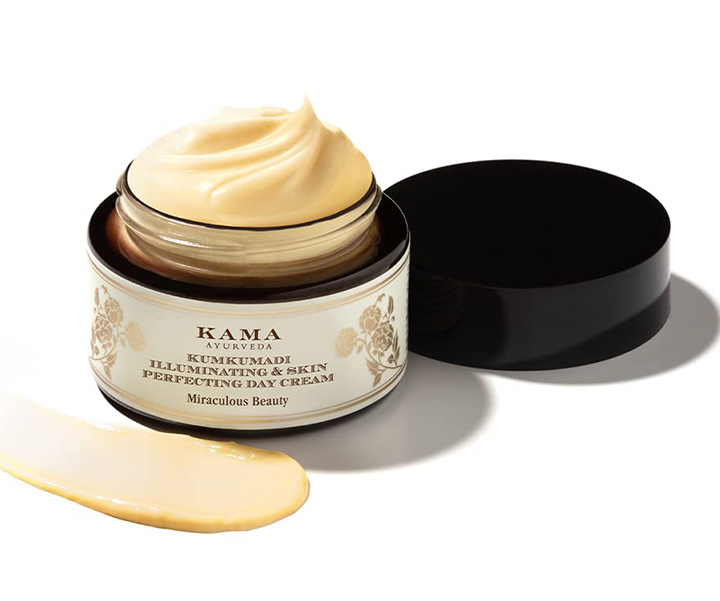
Recently, Kama Ayurveda has launched a Day cream rich in the iconic Kumkumadi Thailam. Know all about this new launch.

Know the history and the power of biohacking to strengthen our body and make it more powerful and healthy.

Chemicals are used in most hair care products that can make your hair dull and brittle. Thus, in this article, we are going to discuss 10 best natural ingredients for hair that help to ass lustre & life to your hair minus the woes.