The time when i was diagnosed positive for covid-19
Yes! It's been 10 days already that I am suffering from the disease. Here is my share of experience with the deadly Coronavirus.
Learn how to spot a tattoo infection, how it differs from normal healing, common causes, and aftercare habits that can increase the risk of infection.
By Palak Gupta
Posted on | Last Updated
Fresh ink usually comes with a small rush of excitement, that first look in the mirror at something permanent and exactly the way it was pictured.
Healing feels like a minor formality standing between the appointment and finally showing it off to everyone.
That feeling can shift fast if redness spreads further than expected, swelling refuses to go down, or the skin nearby starts feeling warm, sore, or oddly wet a few days after the needle stopped moving across the skin entirely.
A tattoo infection doesn’t always announce itself clearly, which is exactly why those small changes are worth paying attention to instead of brushing them off as normal irritation that will pass on its own within a day or two.
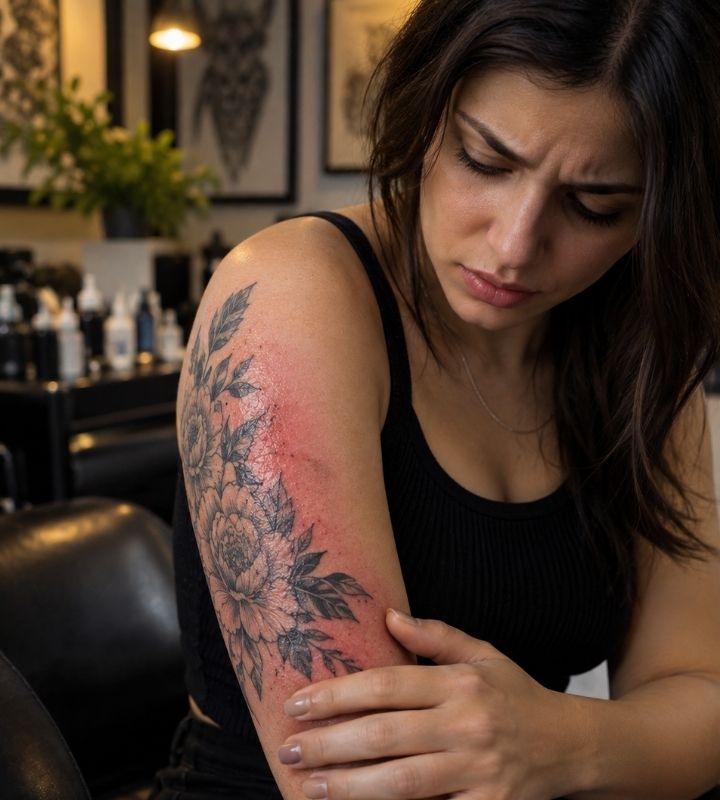
It’s easy to forget, staring at the finished design, that a tattoo starts out as thousands of tiny puncture wounds spread across the skin.
The needle breaks the surface repeatedly to deposit ink, stripping away the barrier that normally keeps bacteria from getting in.
That vulnerability doesn’t disappear the moment the artist wipes everything down and wraps the area.
The skin stays open and exposed for days afterward, which is exactly why the first stretch of healing matters so much more than people tend to expect.
Clean hands, sanitized surfaces, and proper aftercare aren’t suggestions tacked onto a printed sheet for no reason.
They’re the difference between a design healing the way it’s supposed to and something going wrong underneath the surface before anyone even notices.
Some redness, tenderness, and mild swelling are completely expected during the first day or two, which makes early trouble genuinely hard to spot from the outside.
The skin is irritated no matter what, so a little heat and puffiness doesn’t automatically signal disaster.
The real difference tends to show up in direction rather than intensity.
Normal irritation should calm down gradually with each passing day, settling into something milder rather than staying the same or getting noticeably worse as time goes on.
An infection tends to move the opposite way, spreading outward, growing more painful, or producing discharge that has no business being there in the first place.
That trajectory, more than any single day’s appearance, is usually what separates the two situations.
Not every infection traces back to aftercare habits at home. Sometimes the issue begins earlier, tied to equipment that wasn’t properly sterilized, ink that had already been compromised, or a workspace that didn’t meet the standards it should have met.
A reputable shop follows strict protocols specifically to prevent this kind of outcome, relying on sterile needles, single use ink caps, and freshly cleaned stations for every single client who sits down in the chair.
When those standards slip, even briefly, bacteria can get introduced at the exact moment the skin is most vulnerable to it.
That risk exists long before the person getting tattooed ever has any real say in the matter at all.
Even a tattoo applied under perfect conditions can still run into trouble depending on what happens during the weeks that follow.
Picking at scabs, soaking fresh ink in pool or ocean water, or wearing tight clothing that rubs against it all introduce risk.
Touching the area with unwashed hands is another common culprit, one that feels harmless in the moment but can undo careful work done at the shop just days earlier.
Bacteria doesn’t need much of an opening to cause a real problem.
Sun exposure and excessive moisture don’t help either, since both tend to irritate healing skin and slow the whole process down considerably.
Most aftercare instructions exist specifically to prevent these everyday habits from turning a healthy tattoo into a troubled one.
There’s something strange about watching a piece of art quietly shift into a medical concern, especially when the change happens slowly enough to make it easy to second guess.
That gradual shift is exactly why paying close attention matters so much.
Watching how the skin changes day to day, rather than judging solely on how the design looks, is usually what separates catching a problem early from letting it grow into something bigger than it needed to become.
Most tattoos heal exactly the way they’re supposed to without any drama at all.
Knowing what abnormal actually looks like just means fewer surprises if something does eventually start heading in the wrong direction instead.
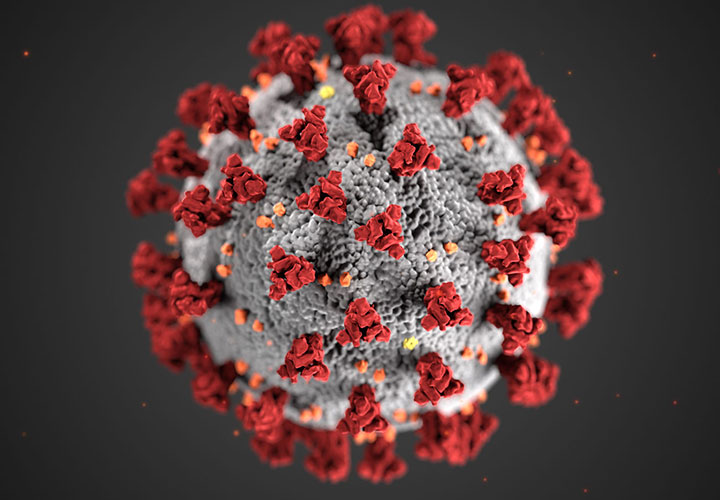
Yes! It's been 10 days already that I am suffering from the disease. Here is my share of experience with the deadly Coronavirus.

Discover the top benefits of daily walking for seniors, from improved mobility and stronger bones to better balance, heart health, and lasting independence.
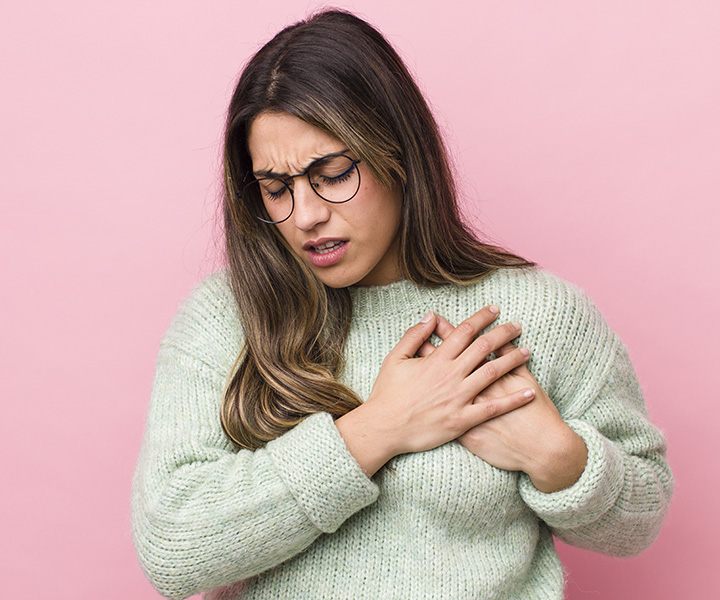
Lately, incidents of young-age people getting heart attacks have increased. Let us find out the root causes and how to prevent the risks at early stage.

Inadequate intake or absorption of essential vitamins can lead to many health problems. Check out how to deal with such deficiencies.
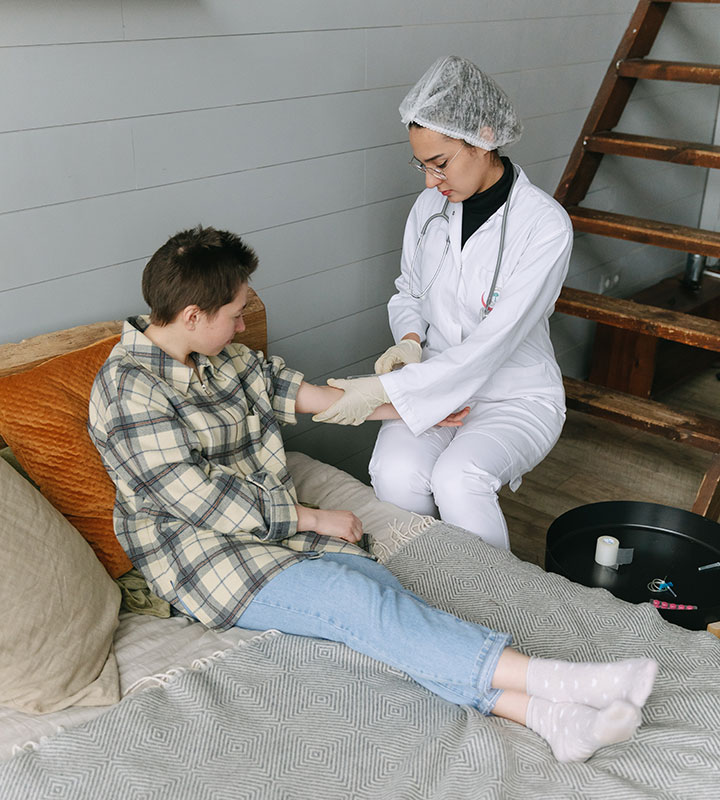
Children suffer from a number of health conditions. It's time to know about the cure of two such orthopaedic problems that are quite common among children.

Mental health issues are increasingly common among college students. Hence, it is quite important to know the signs of mental health struggles. This article might work as an eye-opener to avoid the lurking danger among students.

3 risks you need to consider before using menstrual cups. Learn about irritation, infection and toxic shock syndrome and how to avoid these complications.

After crossing 50, it becomes difficult to grow hair. Well! If you are a quinquagenarian, here is a guideline on how you can do that.

Minor health issues might seem harmless, but ignoring them can lead to bigger problems. From headaches to recurring nosebleeds, here’s why quick action matters.

Snowbirds wintering in Fort Myers can maintain medical weight loss progress with proper planning and continuity of care. Learn how coordinated treatment supports safe, consistent results.

Are you striggling to lose weight at home? Here are 10 easy tips that you can check out to lose some of those flabby layers.

This guide will walk you through everything you need to know about lip filler injections, including the types of lip fillers, and how to achieve the perfect pout.