Why Cannabis and Sleep Is More Complicated Than It Looks
Sleep is not a single state, it is a structured cycle made up of different phases that serve different functions. Rapid eye movement (REM) sleep is linked to dreaming and emotional processing, while deep sleep (slow-wave sleep) is more associated with physical recovery, immune function, and brain restoration.
When people use cannabis for sleep, they are not just influencing how fast they fall asleep, they may also be shifting how these stages are distributed throughout the night.
This is where cannabis becomes complex. Some users report falling asleep faster and staying asleep longer, while others notice changes in dream intensity, reduced dreaming, or feeling less mentally refreshed over time.
These differences are largely tied to how THC and CBD interact with the endocannabinoid system, which plays a role in regulating sleep-wake cycles.
How THC Influences Sleep Architecture
THC is often associated with sedation and faster sleep onset, which is why it is commonly used by people struggling with insomnia or difficulty winding down.
By interacting with CB1 receptors in the brain, THC can reduce sleep latency, meaning it may help users fall asleep more quickly.
However, THC also appears to alter sleep architecture. In many users, especially with regular or higher-dose use, THC can suppress REM sleep.
Since REM sleep is the stage where most vivid dreaming occurs and emotional processing is most active, this suppression often leads to noticeable changes in dream patterns, including fewer or less vivid dreams.
At the same time, THC may increase non-REM sleep in some individuals, particularly deep sleep in the early part of the night.
This can create a feeling of physical restfulness, even when the natural balance of sleep stages is shifted.
Over time, consistent use may reduce overall sleep quality for some users due to changes in sleep structure.
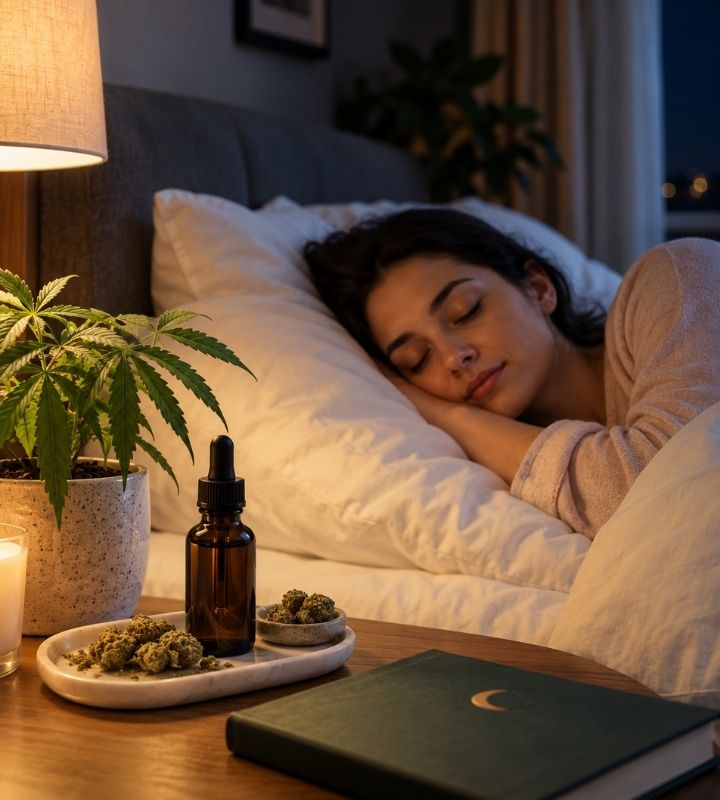
How CBD Interacts With Sleep Cycles
CBD works in a different way. Instead of directly sedating the nervous system, it tends to influence the underlying factors that interfere with sleep, such as anxiety, stress, or physical discomfort.
By calming overactivity in the nervous system, CBD may make it easier for the body to transition naturally into sleep.
CBD does not appear to strongly suppress REM sleep in the same way THC does. Its effects on sleep are more indirect and highly dependent on dosage and individual response.
Lower doses may feel neutral or even mildly alerting for some people, while higher doses are more often associated with relaxation and improved sleep quality.
For individuals whose sleep issues are driven by mental overactivity or stress, guidance from Leaf Doctors can help, as CBD may create a more stable internal environment that supports natural sleep onset rather than forcing sedation.
REM Sleep and Why It Matters for Emotional Processing
REM sleep is one of the most important phases of the sleep cycle. It is strongly associated with dreaming, emotional processing, memory consolidation, and cognitive resilience.
During this stage, the brain organizes emotional experiences and helps regulate stress responses.
When REM sleep is reduced, changes in dreaming are often noticeable. In the context of cannabis use, this typically appears as fewer dreams, less vivid dreams, or reduced dream recall.
In some cases, this effect is not necessarily negative. Users who experience nightmares or emotionally distressing dreams may find reduced REM activity temporarily helpful.
However, long-term suppression of REM sleep is still being studied and may have different implications depending on the individual.
Deep Sleep and Physical Recovery
Deep sleep, also known as slow-wave sleep, is the phase most associated with physical restoration.
During this stage, the body repairs tissue, supports immune function, and regulates key hormones involved in recovery and growth.
Some users report that cannabis helps them feel like they achieve deeper sleep or wake up more physically restored. This may be linked to reduced nighttime awakenings and changes in early-night sleep structure.
However, research findings remain mixed. While short-term use may increase deep sleep in some cases, long-term or heavy use may alter sleep architecture in ways that reduce overall sleep efficiency.
Dream Patterns and Cannabis Use
One of the most commonly reported effects of cannabis on sleep is a change in dreaming. Many users notice fewer dreams, less vivid dreams, or reduced dream recall when using THC regularly.
This is closely tied to REM suppression, since most vivid dreaming occurs during REM sleep.
When cannabis use is reduced or stopped, some individuals experience a temporary rebound effect where dreams become more vivid or intense.
This is often referred to as REM rebound, where the brain temporarily overcompensates as sleep cycles normalize.
CBD does not appear to significantly suppress dreaming in the same way, which is why some users prefer it when they want sleep support without altering dream activity.
Why Dosage and Timing Matter
The impact of cannabis on sleep is highly dose-dependent. Low doses of THC may support relaxation without significantly disrupting sleep cycles, while higher doses are more likely to suppress REM sleep and alter natural sleep architecture.
Timing also plays a major role. Using THC closer to bedtime increases sedative effects and reduces sleep latency, but may also increase REM suppression.
Earlier evening use can produce different outcomes depending on metabolism and sensitivity.
CBD is generally more flexible in timing, but many users find it most effective when taken during a wind-down period rather than immediately before sleep, as its calming effects build gradually.
Long-Term Considerations for Sleep Quality
While cannabis may help with short-term sleep difficulties, long-term use introduces important considerations. One of the most significant is tolerance.
Over time, THC’s sleep-inducing effects may diminish, requiring higher doses to achieve the same outcome, which can increase variability in sleep quality.
Another factor is reliance on external sleep support. Some users may become dependent on cannabis for sleep initiation, making natural sleep patterns less consistent without it.
CBD appears to have a lower risk of tolerance-related sleep disruption, but long-term research is still ongoing.
The Bottom Line on Cannabis and Sleep Cycles
Cannabis interacts with sleep in a complex and highly individual way. THC tends to reduce sleep latency and may increase deep sleep in the short term, but it can also suppress REM sleep and alter dream patterns.
CBD works more indirectly by reducing anxiety and supporting relaxation, which may improve sleep quality without significantly disrupting natural sleep cycles.
There is no universal outcome. Effects depend on dosage, timing, product composition, and individual biology.
For some users, cannabis improves sleep consistency and relaxation, while for others it changes dream patterns or sleep structure in noticeable ways.
Understanding these tradeoffs is essential for using cannabis intentionally as part of a sleep routine rather than relying on it as a guaranteed sleep solution.
Got Flower offers products that are often chosen by wellness-focused users looking for more consistent cannabinoid profiles when integrating cannabis into sleep routines.
FAQ
Does THC help you sleep better?
THC may help reduce sleep latency and promote sedation, but it can also alter sleep architecture, especially REM sleep.
Why do I dream less when using cannabis?
THC can suppress REM sleep, which is the stage most associated with vivid dreaming.
Does CBD improve sleep quality?
CBD may support sleep indirectly by reducing anxiety and promoting relaxation, but it is not a direct sedative.
What happens when you stop using cannabis for sleep?
Some people experience vivid or intense dreams temporarily due to REM rebound as sleep cycles normalize.
Is regular cannabis use safe for sleep?
It may help some users short term, but long-term effects on sleep architecture, tolerance, and dependence should be considered carefully.